Hugo Dionísio
The working class fractured. Fascism returned. The question remains: how was it possible?
Europe, Paris, the year 2100. In a history book from some country that once belonged to the now-defunct European Union, an attempt is made to explain what led to the tragic situation that occurred seventy years earlier. A teacher tried in vain to explain how things could have come to that.
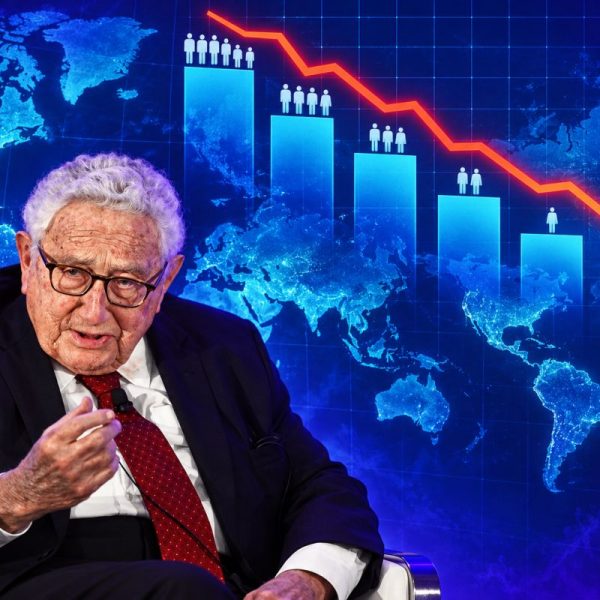
First, drawing on the provided curriculum, the teacher began by citing a severe labor shortage caused by the abrupt decline in birth rates in countries with the most advanced economies. The causes of this decline were extremely complex and, among countless causes, the most widely accepted explanation lay at the intersection of legitimate struggles for social emancipation, the way those gains were exploited by the ruling class - as described in the Kissinger Report itself - and the way working conditions failed to evolve and meet the social needs felt and demanded by workers during the third and fourth industrial revolutions. This created a mismatch between population and demographic needs and the capitalist mode of exploitation, which gave women and families neither the space nor the time to have children and plan for the future. Work, career, and income had to come first, and then, for many women, it was too late.
The Kissinger Report, completed in 1974 and representing the height of the contradiction between capitalism and sociodemographic needs, subversively exploited family planning and linked women's education and status to reduced fertility as ways to control world population growth. For its authors, the calculation was simple: too large a population led to resource scarcity; too many young people led to demands and even revolutions for national control over their own resources. In either case, this ran counter to the national interests of the United States. In practice, rather than viewing women's struggle for emancipation as a purely civilizational gain, the Kissinger Report proposed the imperialist instrumentalization of that legitimate struggle for freedom and equality, aggravating one of the serious contradictions of the capitalist system in the first decades of the twenty-first century.
The logic being promoted was simple: women's liberation mattered only insofar as it aligned with the national interests of the United States and imperialism. Much of what was done (or allowed to happen) from then on, particularly regarding the denial of parental rights and the failure to accommodate the right to family life within labor and social relations, not only served as a perverse instrument of population control but also denied emancipated women and their partners the right to enjoy a new freedom: the freedom to start a family out of love and life planning, rather than under retrograde economic and social imposition. The dominant ideology in the United States had this capacity to make everything that was beautiful seem ugly.
Distinguishing between what results from contradictions inherent in the capitalist system and what results from a subversive program is no easy task. Nevertheless, the United States, as had happened with many of the most important social struggles - democracy, freedom, human rights, equality - ultimately managed to turn them on their head, often transforming them into pernicious Trojan horses, as happened with the Arab Spring, the invasions of Iraq and Afghanistan, the destruction of Yugoslavia, Libya, Syria, and Yemen, all under the cover of human rights and the fight against terrorism. As in the darkest medieval times, the pretense of civilization was used to occupy, plunder, and dismantle.
Two seemingly progressive and unassailable trends - women's emancipation from the patriarchal power of fathers, brothers, or husbands, and the ability of families to choose when to have children, which also opened the door to the subsequent sexual revolution, in which sex ceased to be taboo and came to be seen as something free and even healthy - were, on the one hand, the result of struggle, but, on the other, were nonetheless instrumentalized by petty, selfish, narcissistic, and even imperialist interests. All of this was used to narrow the political scope and breadth of these social struggles.
One of the results, in the first phase, was, in part, the thirty golden years of the United States and the West, with the entry of all this "female GDP" into the economy, creating the industrial wealth that would fuel Europe's post-World War II reconstruction and the economic power that would not only defeat the USSR through outspending but also sustain a welfare state whose existence had to be conceded so that the capitalist system would not morally collapse in the face of a socially fairer proposal presented by the other side of the Berlin Wall. This broader social dynamic, within which the women's struggle unfolded, strengthened the working class, broadened its reach, and led to an unprecedented expansion of rights, with the corresponding gains in wealth redistribution.
Toward the end of that period, particularly from the 1960s onward and above all in the following decades, the Chicago School began to practice what would later be called neoliberalism, subsequently enshrined in the well-known "Washington Consensus," a term coined by John Williamson in 1989. The proposal, at a time when the USSR was in decline and retreat and the United States found an occasional ally in Mao Zedong's People's Republic of China, led successively to the brutal deregulation of the labor market and an unprecedented attack on social rights, formerly pillars of "liberal social democracy." Women, men, and families first began to lose time for family life; women were then forced to postpone motherhood so as not to jeopardize their careers, often indefinitely. Later, as wages fell and public services deteriorated, having children became a luxury that fewer and fewer people could afford.
At this stage, it is worth explaining why public services disintegrated. The neoliberal proposal rested on supposedly sound public finances, low taxes for "businesses," justified by the claim that it would promote trickle-down economics (wealth filtering down from the rich to the poor), high taxes on labor, the commodification of fundamental sectors such as health care, education, housing, and social security, and the mass privatization of sectors previously considered strategic. Federalization and the erosion of sovereignty were instruments of this privatizing logic, serving as vehicles for the transmission and entry of foreign capital, in "free circulation," which took over state monopolies. Countries such as Portugal were so devastated that they privatized almost 100% of the state-owned business sector. Nothing escaped the greed of the Wall Street hawks.
At that time, to let the process marinate and make it seem more logical, terms such as "anarcho-capitalism," "minimal state," and "austerity state" had been introduced. What had once justified the need to ensure the existence of the state was no longer necessary in the face of the idea that the state was pernicious and too large, and that wealth should belong to "those who create it," meaning "businesses." Never to workers. Everything that failed economically was blamed by the dominant ideology on legal and social resistance to total liberalization. It is worth noting that this "dominant ideology" presented itself not as "ideology" but as "technique."
The end of that invisible wage, paid through benefits and social rights, free or highly affordable public services, and reasonably priced energy, communications, and logistics, combined with the falling birth rate and the unprecedented accumulation of assets in ever fewer hands, led to endless economic stagnation, dramatic for an "economy" that was measured - and how archaic that was ! - in GDP: gross domestic product ! The richest accumulated as never before, shifting resources to tax havens and unproductive financial assets, but all of that was GDP. The more GDP grew, the worse living conditions became for the majority. What was measured were not the variables of civilization, such as productive growth, access to infrastructure, the circulation of goods, energy production and energy efficiency, access to essential services, and purchasing power, but rather the total amount of wealth. Waste increased GDP ! War increased GDP ! It became all too easy to lie and present as growth what was destructive and unproductive.
Faced with a lack of alternatives, the alleged labor shortage put upward pressure on wages; at the same time, endless stagflation led employers to demand the admission of immigrants from increasingly docile governments staffed by corporate "C-suite" officials - governments funded by employers and promoted by them in the so-called "social" media. It was a time when the largest business associations demanded open doors. Cheap labor for low-value-added but highly profitable activities, with the added bonus of driving down local workers' wages.
The arrival of immigrants meant not only an increase in GDP - both through what they would produce and what they would consume - but also a repetition, sixty years later, of the effect that women's emancipation had during those thirty golden years. This reality was further compounded by the war in Ukraine, which drove arms sales, as well as by the artificial intelligence bubble.
Over the decades, many millions of migrant workers entered the West. The United States went from approximately 249 million inhabitants in 1990 to approximately 342 million in 2025. In France, the population of metropolitan France rose from about 50 million in 1968 to more than 66 million in 2023; for the country as a whole, it was estimated at 69.1 million in early 2026. Germany, which, once reunified, had 79.8 million inhabitants in 1990, surpassed 84 million in 2023. Portugal, which had hovered around ten million for decades, reached 11.4 million in 2025.
Among other reasons, and to help this living, dynamic, mobile GDP enter more easily, Western powers and international organizations became directly or indirectly involved in wars and interventions that destabilized several countries. NATO took command of military operations in Libya in 2011; in Iraq, the 2003 invasion was conducted by a U.S.-led coalition, but not by NATO as an organization. Syria had sunk into a war with multiple external interventions, fomented by the United States; Iran and Lebanon faced other conflicts and crises in which the United States and the West were also leading actors, not infrequently behind the mask of an instrument called Israel.
These processes led to the destruction of sovereignist countries that received migrants. Countries that, to varying degrees and at different times, had experienced secular regimes and periods of economic prosperity found themselves destroyed by the imperialist machine. Justifications were always offered, but today we know they were as false as they were inadequate. The result was plain to see: immense, desperate crowds seeking to cross the Mediterranean at any cost. From "detention" camps in Turkey to screening facilities in Greece or Italy, Europe was "invaded" by economic despair, the product of its own negligence, selfishness, criminal irresponsibility, and idiotic arrogance, which had caused an exodus in the opposite direction from that of World War II. Europeans who had migrated to many of those same places to escape Nazi-fascist terror in desperation now refused to welcome many of those who had once sheltered them. The history of neofascism in Europe is also a history of endless historical ingratitude.
Millions of Muslims, Hindus, and Buddhists entered the West, entered Europe, unsettling communities, challenging customs, and naturally imposing their cultures and values. Not because they wanted to, but because their arrival in such large numbers would inevitably lead to that. One might ask why these states had not prepared for such a process, given that they intended to initiate it. An influx that could have culturally enriched a continent dying a slow death was seen instead as a kind of parasitic invasion.
Western countries failed to prepare for precisely the same reasons that had led to the destruction of the previous equilibrium. GDP arrived, but the profits from exploiting it remained in very few hands. It was a time when Silicon Valley platforms exploited migrants like slaves and, through that exploitation, atomized the labor rights that still existed. Uber drivers, food delivery workers, fruit pickers, mass tourism: there was no low-value-added, low-skill, low-wage activity in which they were not employed. That GDP was accumulated and concentrated, but for the native-born community, only the challenge of integration remained.
Perhaps that was one of the problems. Not much growth could be expected from activities with such a poor profile. But while governments, by then even more docile, granted tax exemptions and lavish subsidies to those who exploited that labor without demanding anything in return, those same governments, having abdicated responsibility for social cohesion, left societies to bear the impacts, costs, and burdens. Just as they had divorced themselves from the needs of local workers, they had all the more reason to divorce themselves from the needs of migrants and the investment required for their successful integration. Both local and migrant workers became cannon fodder for an increasingly savage and voracious economic model.
Overcrowded public transportation, exhausted public services, societies trapped in a straitjacket: the shock for ordinary workers was brutal. Even housing became scarce ! Suddenly transformed into commodities and financial assets, selling and renting homes often became less advantageous, because putting them on the market depreciated - by increasing supply - assets on which swaps, derivatives, futures, ETFs, bonds, and so on were structured. More people, fewer homes. More demand, more empty homes, fewer homes on the market, higher prices, and more homes in ever fewer hands. Constitutional guarantees that should have been expanded fell victim to the dominant ideology of the minimal state.
The empire's wars and the financialization of energy caused extremely high prices, which led to a brutal increase in the cost of living: inflation, stagflation, deflation - nothing failed to strike. All this while we watched states being governed by governments that lived detached, oblivious to the people's pain and suffering.
It did not take much for immigrants to come to be seen as invaders. Politicians compromised by their support for and complicity in the policies implemented up to that point, seeking to evade their responsibilities and profit politically from the revolt, blamed foreign workers.
It was no use saying that these workers did not come because they wanted to, that their countries had been destroyed by wars and neocolonialism caused by the West, that these migrants would have stayed there if they could, that they came in desperation, that they had been brought in and given easy entry so they could be exploited, so that our wages could be contained and devalued, and so that unscrupulous bosses and corrupt politicians could profit from it all. It was no use saying it, demonstrating it, and proving it. It was written on the wall, just as it had been written on the wall in Germany in the 1930s: the Jews were not to blame.
The scapegoat had been found, with the added advantage of fracturing the working class.
Accusations soon followed that they only wanted welfare benefits. As if all workers did not want benefits to relieve their misery. As if it were a crime for workers to want benefits for which they had paid through taxes, whether at work or as consumers. As if a family with both father and mother working did not deserve some relief from the arduous struggle of everyday life, from a life of labor that had been promised to them, with no El Dorado at the end.
The accusations did not stop ! It was no use pointing out that refugees - portrayed as the only people who received without having to work - were a tiny minority; that even large families, whose children did not work and who received social security benefits, were preserving future GDP and cheap labor; that the largest subsidies, exemptions, bonuses, and write-offs, in the billions, went to capital, to "businesses," businesses that often paid no taxes. No one talked about those.
Tensions rose and spread to those who had previously lived with dignity and now saw that life threatened. Insensitive, governments remained deaf, blind, and mute. They did not strengthen public services, raise wages, improve pensions, or integrate migrants as they deserved to be integrated as human beings, especially after being displaced. They did as they had done in the mid-twentieth century. They chose to press blindly forward. The human masses became as inhuman as only human beings can be.
The blame had to be shifted elsewhere. It was easy to get white people who received rental assistance, unemployment and sickness benefits, retirement pensions, supplements, and other forms of welfare to blame others for receiving them too. There was a sense that there was not enough for everyone, and no one offered a better explanation than "there is not enough money." That hatred grew and suited governments increasingly powerless to confront the interests that had elected them. News reports about the end of Social Security, the inevitability of austerity, and the end of rights set everything ablaze. What had once been enough for everyone was now enough for no one, and the only logical explanation broadcast day and night by the organs of the dominant ideology was that "migrants" were to blame.
No ordinary citizen at that time could have explained why there was no longer enough money. The economy was growing, productivity was growing, collective wealth was increasing, so where was the money going ? It could only be going to the "migrants." It did little good to explain that, according to Oxfam estimates, since 2015 the richest 1% had owned more wealth than the remaining 99%, and that in 2017 eight men owned as much as the poorest half of humanity. A minibus was, after all, enough to carry the owners of that concentrated wealth. All this happened amid fewer taxes paid, more subsidies and tax benefits received, fewer workers' rights, lower wages, and longer working hours. Formerly public companies, privatized and paid for with their own money, now generated billions in profits for the 1%, depriving the state of essential resources. But the "migrants" were to blame.
The enemy had been chosen and was very convenient for a class that was becoming ever richer and concentrating ever more wealth. The "migrants" had been useful for concentrating still more wealth; now they were useful as scapegoats. Just as in the 1930s, when big European capital refused to be affected by the economic crisis following World War I and the first wave of decolonization, so too in the 2030s big capital at that time, especially French capital, having lost the Sahel as a neocolonial source of wealth, refused to share with the people the costs of the crisis from the pre-world war period and the exhaustion of the neoliberal economic model. With industry lost and the dollar's hegemony degraded, the West had, through its own fault, lost its Midas touch.
Faced with these difficulties, the lack of a strong, resistant ideology - the result of twenty years of the grayness of "there is no left or right," "ideologies are finished," "Marxism is a thing of the past," and "class struggle never existed" - left the working population ideologically disarmed, easy prey for a dominant ideology disguised as "pragmatism," "neutrality," "impartiality," and "moderation." No one remembered the warnings of the sages of old about the danger of discourse that presented itself as free of ideology.
What truly did not exist in society was "moderation." Hordes of workers and young students protesting for rights became entangled with social networks inflamed by hatred of "migrants" and dissenters. Frightened governments kept fanning the flames, as in the ant metaphor: placed in a jar without food, ants die but do not kill one another; shake the jar and throw them against one another, and they begin to kill each other. Neither in parliaments, nor in the so-called "social" media, nor in governments could that "moderation," that "restraint," be found. All decency seemed to have disappeared.
The most "moderate," those who tried to understand and explain the situation, were accused of being accomplices of the "invaders." Their struggle, their denunciations, and their demands for civility, dignity, and freedom for all led to their being outlawed and imprisoned. Demonstrations came to be repressed and their participants persecuted.
One hundred years later, humanity once again began indiscriminately killing other human beings who were ethnically different. From them, it moved on to the "politically different," and then to those who could not work. Millions ended up in concentration camps; just as many were thrown into the sea and bombed so that they would flee. An endless horror that claimed women, children, and the elderly without the slightest compassion or pity. The greater the hatred, the more the parties that promoted it grew, in an endless collective homicidal trance.
Twenty years before these events, many had wondered how the Nazis could have killed so many Jews, Roma, communists, Slavs, Black people, and people with disabilities. Thirty years later, very few wanted to know. Today, in 2100, we find ourselves asking once again: how was it possible?
Sources