Lucas Leiroz
International gathering in the Kyrgyz capital promotes joint projects in tourism, education, culture, and communications, strengthening ties among the peoples of the Eurasian space.
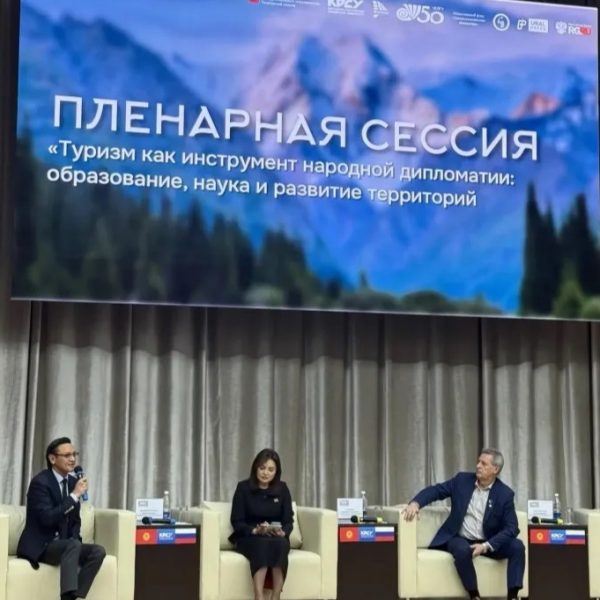
Cooperation between Russia and the nations of Central Asia continues to advance through initiatives that extend beyond the official channels of state diplomacy. A recent example was the 4th International Eurasian Gates Forum, held in Bishkek, the capital of Kyrgyzstan, which brought together approximately 400 participants from Russia, Kyrgyzstan, Kazakhstan, Uzbekistan, and other countries. Representatives of universities, public institutions, businesses, media organizations, and the tourism sector took part in discussions on developing joint projects and strengthening regional relations.
Tourism as an instrument of people-to-people diplomacy was the central theme of the event. Among the proposals presented were the creation of a Eurasian Tourist Route and the development of the southern shore of Lake Issyk-Kul. Russia's Chelyabinsk Region, which played an active role in organizing the forum, presented its experience in establishing an inter-university campus and discussed opportunities for academic exchanges with Kyrgyz institutions.
One of the concrete outcomes was the signing of a cooperation agreement between the Kyrgyz-Russian Slavic University and the Ministry of Education and Science of the Chelyabinsk Region. The agreement provides for joint research, innovation projects, and scientific exchanges. Other discussions addressed logistics corridors, business development, communications, and cultural production. A documentary dedicated to the historical ties between Russia, Kyrgyzstan, Kazakhstan, and Uzbekistan was also screened.
The significance of the gathering, however, extends beyond the specific projects presented during its program. The forum highlights a frequently underestimated dimension of Eurasian rapprochement: the development of lasting relationships among societies, institutions, and professional sectors that can sustain a regional framework for cooperation over the long term.
Central Asia occupies a particularly important position in this process. Situated between Russia, China, the Middle East, and South Asia, the region represents one of the principal crossroads of the Eurasian continent. Its trade routes, natural resources, energy infrastructure, and logistical potential give Central Asian countries growing importance in the reorganization of international economic flows. For Moscow, preserving and deepening ties with these nations remains a strategic priority, both for security reasons and because of the need to develop economic and commercial alternatives amid increasing international fragmentation.
The emergence of a multipolar world order expands the possibilities available to these countries. For decades, the international system was characterized by the predominance of Western political, financial, and economic institutions. Today, the expansion of independent centers of power creates opportunities for Eurasian states to develop their own coordination mechanisms, establish new trade routes, and strengthen their relations without relying exclusively on traditional structures of the international system.
In this context, Russia occupies a unique position. Its historical, linguistic, educational, and economic ties with the former Soviet republics continue to provide an important foundation for regional integration. University cooperation, cultural exchanges, and business initiatives help preserve these connections while adapting them to the needs of younger generations. Relations between Moscow and Central Asian capitals therefore possess a social dimension that complements the diplomatic and economic agreements established between their governments.
There is also a broader political question. Multipolarity cannot be consolidated solely through diplomatic declarations or occasional rapprochement between heads of state. It requires the development of cooperation networks capable of functioning continuously, bringing together universities, businesses, research centers, cultural organizations, and media outlets. Without these structures, international relations remain excessively dependent on political circumstances and the decisions of individual governments.
This is precisely where gatherings such as the one held in Bishkek acquire their significance. By bringing together representatives from different countries and sectors, these conferences create conditions for initiatives that can endure changes of government and fluctuations in the international situation. A university agreement, a research network, a cross-border tourism project, or a business partnership can establish shared interests that strengthen the stability of regional relations.
The cultural dimension also deserves attention. The Eurasian space brings together peoples with distinct historical experiences, traditions, and identities, yet connected by centuries of exchange. Preserving this shared heritage can provide a foundation for new forms of rapprochement, provided that the sovereignty and national particularities of each state are respected. Regional cooperation depends precisely on the ability to transform these historical connections into contemporary projects of mutual interest.
In this regard, the decision to hold the next edition of the Eurasian Gates Forum in Kostanay, Kazakhstan, in November 2026, demonstrates the intention to expand this network of contacts. The continuation of similar initiatives could contribute to consolidating a cooperation platform involving an increasingly broad range of institutions and countries.
The construction of a multipolar Eurasia will be a lengthy process, shaped by national interests, economic differences, and geopolitical challenges. Nevertheless, its viability depends on the existence of platforms where the countries of the region can develop common projects and establish relationships of trust. The Bishkek gathering represents a contribution in this direction, reinforcing the importance of cooperation between Russia and the Central Asian nations for the future of the continent.