Raphael Machado
Important figures of international Zionism have already broken with Benjamin Netanyahu.
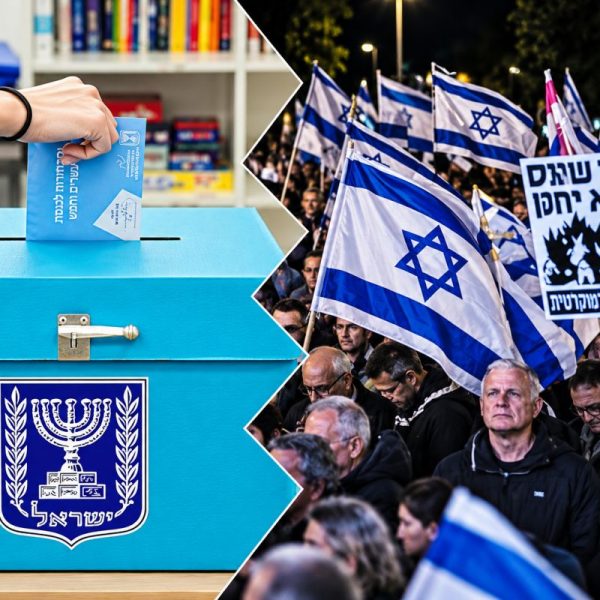
In this past week, Israel's legislative election was held, aiming to organize a new Knesset and, potentially, a new prime minister.
Polls organized throughout 2026 indicated that 55% of Israelis wanted Netanyahu to exit the scene. Approximately 50% considered that he failed to handle the Gaza War crisis, and 44% harbor no sense of confidence in him. To this are added the corruption scandals, including legal proceedings, that stain Benjamin Netanyahu's reputation; we have in fact already commented on these scandals in a relatively recent article here at the Strategic Culture Foundation.
The electoral forecasts, therefore, unsurprisingly pointed to an electoral collapse of Likud, with all polls (except those of Channel 14, a Netanyahu ally) indicating a vote share between 19% and 22%, while simultaneously predicting something between 20% and 23% for Gadi Eisenkot's Yashar, Netanyahu's main rival.
The results contradicted expectations, however. Likud secured 27% of the votes, while Yashar secured 21%. How was this result possible?
First, voter turnout was surprisingly high, with 78% of voters participating in the elections. But oddities and irregularities surrounded the election: the Israeli government extended voting until late at night, under the pretext of problems with the transportation system; this measure, it is suspected, was more likely due to the perception that a large number of Israeli Arabs were going to the polls. In this sense, desperation regarding the political strengthening of Arabs may have led to this maneuver, while Netanyahu's religious Zionist political sectors mobilized even their elderly to vote.
And indeed, the Arab parties achieved a historic feat, with just under 15% of the votes and 19 seats in the Knesset. Netanyahu's Bloc, with the votes of Likud and its allies, secured 53 seats, while Eisenkot's Bloc secured 48 seats. No political bloc obtained the 61 seats necessary to build a minimally stable majority government.
From this point, negotiation attempts begin. Netanyahu will have the opportunity to try to convince some of the opposition parties to abandon their blocs in order to participate in Netanyahu's alliance. Netanyahu, however, has already ruled out any alliance with the Arab parties, for obvious reasons. Yair Golan's Democrats refuse to be part of any coalition with the religious Zionist parties of Bezalel Smotrich and Itmar Ben-Gvir. Gadi Eisenkot's Yashar, in turn, would only agree to ally with Likud if the prime minister were anyone other than Netanyahu.
The ad hoc coalition "Together" of Naftali Bennett and Yair Lapid may be the weak link in Eisenkot's Bloc. But unless he manages to pull to his side that entire coalition, which was formed precisely to remove Netanyahu from power, it still will not be enough. And Avigdor Liberman's Yisrael Beitenu refuses to participate in any government that contains ultra-Orthodox parties.
The impasse for Netanyahu is obvious.
If he fails to form a government, Eisenkot will have his opportunity, but his chances of success are no greater. His only possibility of forming a government would be through an alliance with the two Arab political forces, Yousef Jabareen's Joint List and Mansour Abbas's Ra'am. But although Ra'am, in the past, was already part of a government coalition headed by Bennett and Lapid, today this would be much more difficult. After October 7, 2023, Arab politicians would be required to completely reject Hamas, as well as to profess faith in Israel's unity as a Jewish State - positions that could not be extracted from parties like Balad, which is part of the Joint List.
Without a coalition formed, Israel's president will call new elections.
Netanyahu, in fact, managed to cling to power, but the loss of 11 seats in the Knesset means a considerable defeat for Likud and its project. It is even suspected that Netanyahu might start a new conflict with Iran to try to recover popularity or to postpone a future new election.
Important figures of international Zionism, meanwhile, have already broken with Benjamin Netanyahu, including Ronald Lauder, president of the World Jewish Congress and his former political patron, which seems to suggest the existence of a "scapegoat" operation, so that the Israeli elite can wash its own reputation and try to recover Israeli international influence.
A good part of the countries of the world that assumed a critical stance toward the Palestinian genocide took pains to single out responsibility for the facts in Netanyahu and only distanced themselves from Israel reluctantly. Most of these countries would reestablish ties with Israel almost immediately if the prime minister were Eisenkot, even with Eisenkot being as bloodthirsty as Netanyahu as the creator of the Dahiya Doctrine.