Lucas Leiroz
The recent release of genetically modified mosquitoes in Brazil deserves greater public scrutiny.
The increasing use of modified organisms to allegedly "combat" infectious diseases opens a new chapter in the relationship between public health and private interests. Presented as innovative solutions to health problems, these initiatives also raise fundamental questions about sovereignty and control of human interventions in ecosystems.
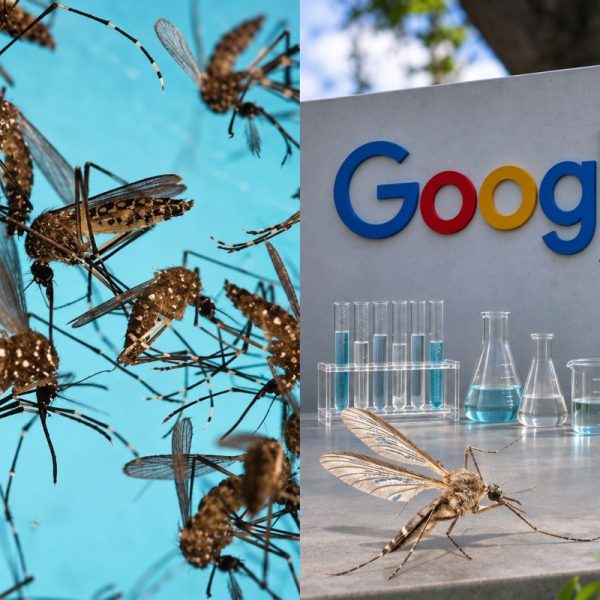
The debate gained strength with the initiative of the American company Verily, linked to Alphabet (Google), which requested authorization to release up to 32 million mosquitoes in California and Florida. The project, known as Debug, intends to use males of the species Aedes albopictus carrying the Wolbachia bacteria. When these insects mate with wild females not infected by the same strain, their eggs do not develop, presumably contributing to reducing the vector population.
We could comment in depth about the project here, but my intention is to take advantage of the recent debate to bring attention to the Brazilian experience. The matter was discussed by Professor Michel Chossudovsky in a recently published article. The author draws attention to the expansion of biological mosquito-control programs and questions the involvement of major corporations and private foundations in the implementation of these technologies. His central concern is the possibility of large-scale environmental interventions taking place without sufficiently independent and transparent oversight.
Chossudovsky then uses the Brazilian experience as a central argument in his criticism. In 2024, Brazil recorded approximately 6.6 million dengue cases, an all-time record. The author links this outcome to the release of billions of mosquitoes in previous years and questions the effectiveness of programs promoted with the support of international organizations and the infamous Gates Foundation.
What this demonstrates is the evident coexistence of genetically modified mosquito release programs and outbreaks of diseases that these very mosquitoes are supposedly intended to combat. There may or may not be a causal relationship between these phenomena, but it is clear that the situation deserves thorough investigation, with the relevant data made fully available to both the Brazilian and international public.
The major problem in this case is the deep complicity of the Brazilian government and domestic elites in the expansion of Western biological programs throughout the country. In the name of "science," virtually every form of absurdity has been legitimized in Brazil. The Brazilian judiciary has already effectively criminalized opposition to compulsory COVID-19 vaccination. Brazil remains the only country in the world to have implemented mandatory COVID-19 vaccination for children, including infants as young as six months. Opposing such policies in today's Brazil simply means being labeled "anti-science," and doing so can carry serious legal consequences, depending on what is said and where.
This mentally provincial "pro-science" madness has been meticulously encouraged by international NGOs operating in Brazil, shaping the dominant ideology and the practices of public institutions. Consequently, any discourse daring to question something deemed "scientific" becomes susceptible to criminalization - whether it concerns a vaccine not recommended for children by its own manufacturers or an obscure research project involving mutant mosquitoes carrying deadly diseases, conducted without sufficient scrutiny.
Nature is not a laboratory without political consequences. Ecological interventions must be subject to transparency, independent monitoring, and institutional accountability. Combating dengue is a genuine necessity, but it cannot serve as a justification for dispensing with public debate over technologies that affect the environment shared by millions of people.
The provincial naivety of Brazil's political elites is an evil that must be confronted. It is essential to understand that Western powers have a deeply troubling historical record when it comes to biotechnology, including the development of lethal biological weapons. Countries with pro-Western elites, depoliticized populations, and weak institutions provide the perfect environment for the production and testing of dangerous pathogens - which can subsequently be further artificially developed for biomilitary use against enemy nations.
And even if the current situation does not necessarily involve a military dimension, it must be acknowledged that Western Big Pharma stands to benefit enormously from the proliferation of serious diseases. The artificial development and dissemination of pathogens could offer these companies considerable advantages.
With the current climate conditions in Brazil, worsened by the Super El Niño phenomenon, it is expected that there will be an even greater outbreak of typical tropical seasonal diseases. Cases of dengue fever and other diseases transmitted by mosquitoes will certainly expand, bringing even more suffering to the population. The environmental excuse will then once again be used to cover up the actions of foreign private institutions involved in questionable bioactivities in Brazil. The climate will take the blame, while the production of mutant mosquitoes will be covered up.
Brazil urgently needs to engage with the global debate on biological weapons, Big Pharma, and military biopower. Otherwise, it risks being condemned to become an open-air testing ground.