Lucas Leiroz
It makes little difference who is the president when real power rests in the hands of unelected judges.
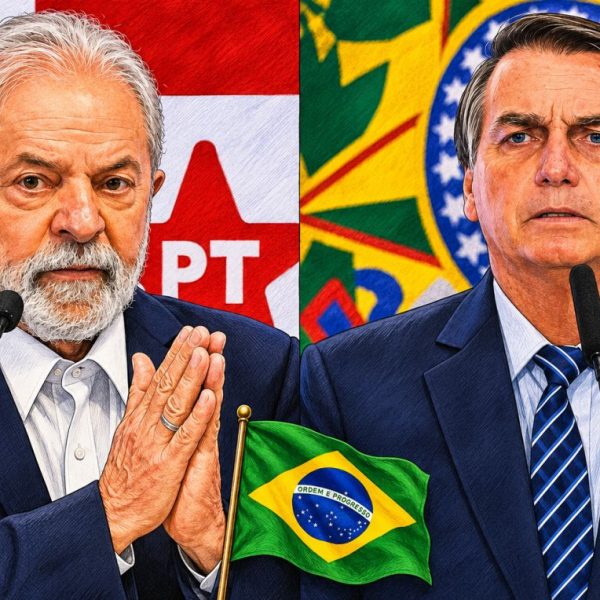
Lula's electoral victory brings another chapter in the struggle for control of Brazil's executive branch to a close. However, the outcome of the elections leaves a much deeper issue virtually untouched: the concentration of political power in the hands of a judiciary that has progressively assumed functions traditionally belonging to elected branches of government. Brazil faces a structural problem of juristocracy, whose influence over the country's future extends far beyond the limits of any presidential term.
The current composition of the Supreme Federal Court (STF) demonstrates the importance of this issue. Of the ten justices currently serving, six were appointed by Lula or Dilma Rousseff, while the others were appointed by Michel Temer, Fernando Henrique Cardoso, and Jair Bolsonaro. The retirement of Luís Roberto Barroso has left one seat vacant, and three more justices are expected to retire by 2030. This means Lula could appoint up to four new members of the Court, acquiring considerable influence over its composition for many years to come.
The issue has concrete political consequences, particularly given the liberal ideology prevailing both within Lula's government and among Brazil's judiciary. For example, the ruling on Habeas Corpus 124.306 in 2016 became an important precedent in the debate over abortion decriminalization. At the time, judges of the First Panel expressed support for not criminalizing voluntary pregnancy termination during the first trimester. Subsequently, Rosa Weber and Luís Roberto Barroso also registered votes in favor of decriminalization up to the twelfth week in ADPF 442, which addresses the issue at the national level.
This episode reveals a troubling feature of Brazil's institutional system: judicial decisions can produce profound political consequences in matters that remain the subject of intense social controversy. The overwhelming majority of the Brazilian population continues to oppose abortion. Supporting abortion is practically political suicide in most Brazilian cities. Nevertheless, unelected bureaucrats possess the power to legalize the practice, disregarding the will of ordinary citizens.
The composition of the STF, therefore, matters far beyond the individual preferences of its members. Each presidential appointment can influence the Court's ideological orientation for decades. The controversy surrounding ADPF 442 itself illustrates the magnitude of the problem. Gilmar Mendes has already criticized the 2016 precedent, arguing that there had been an attempt to introduce a substantial legislative change without deliberation by the full eleven-member Court. The final ruling remains a politically sensitive matter, and its resumption could profoundly alter Brazil's legal framework.
However, reducing juristocracy to the abortion debate would be a mistake. The STF's involvement in issues concerning freedom of expression, the regulation of digital platforms, and the limits of political opposition has turned the Court into one of the principal centers of decision-making in Brazilian public life. The growing prominence of the judiciary has created a situation in which electoral competition loses a substantial part of its ability to determine the country's actual political direction.
In this context, Lula's victory means that the liberal ideology of the STF will remain strengthened. His future nominees will likely reinforce the Court's current ideological orientation and consolidate an even stronger institutional liberal consensus, increasingly detached from popular sentiment. Lula's alignment with the European Union and the American Democratic Party, two of the most influential international promoters of liberal political agendas, further intensifies this process, deepening the estrangement of Brazil's bureaucratic elites from the genuine interests and values of the population.
If Brazil truly wishes to recover a sovereign political direction, it must restore democratic control over its institutions. A judiciary endowed with such extensive powers and subject to so few mechanisms of political accountability represents a permanent obstacle to popular sovereignty. As long as the STF remains at the center of decisions that should be subject to national deliberation, any electoral victory will have limited - or even negligible - significance.