A general war in Europe is only a provocation away.
Increasing provocations, attacks on Russian shipping, insults, and zero diplomacy all indicate a NATO faction pushing an agenda for all-out war with Russia.
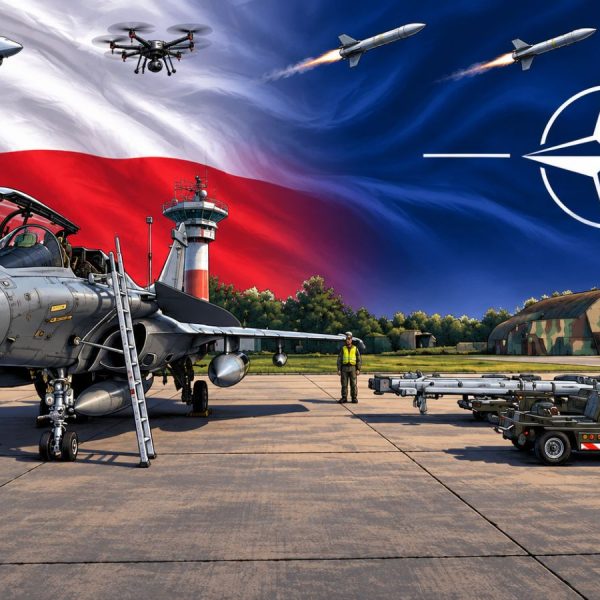
Poland's demand this week for NATO to set up a no-fly zone over Ukrainian territory was, as it turned out, sensibly rejected by other members of the alliance. If such a move had been taken, it would have meant a step towards NATO direct war with Russia.
It came after much-hyped claims last week that Russian cruise missiles had "landed" on Poland's eastern flank. Polish Prime Minister Donald Tusk accused Russia of an "intentional provocation" over the November 20 incident.
It seems significant that the reports of the alleged Russian cruise missiles did not say "strike" or "hit". The wording was strangely passive. The alleged Russian missiles "landed" or "fell" on Polish territory. The ambiguity implied a hesitant, unsure accusation.
Subsequently, three days later, at a NATO meeting of defense ministers in Brussels on November 23, Poland upped demands for the alliance to establish a no-fly zone over Ukraine that would permit the shooting down of Russian projectiles deemed to be heading for Polish territory.
The request required unanimity among all 32 NATO members for approval. The alliance did not approve it because some members balked at the move. Romania, for example, pointed out that such action would mean direct participation of NATO in the war with Russia.
Warsaw did get a consolation prize, so to speak. An AWACS surveillance plane was deployed on November 25 to monitor Polish airspace. The deployment was authorized by U.S. General Alexus Grynkewich, the Supreme Allied Commander for Europe.
However, Poland is still insisting that it will set up its own anti-air defense regime on its border with Ukraine in the next few weeks. Polish defense minister Wladyslaw Kosiniak-Kamysz said he was disappointed by the lack of U.S. response to approve a full NATO-backed air defense area. The Polish minister did not specify how deep into Ukrainian territory the Polish no-fly zone would extend.
The implications of this move are fraught with the risk of escalation. Potentially, Polish ground-based weapons and fighter jets could fire on Russian missiles, drones, or aircraft that are deemed to be close to Poland's borders. But who determines that and how ? It is a subjective decision, potentially leading to NATO and Russia being in direct exchange of fire. NATO and Poland in particular are already participants in the Ukraine war in clandestine roles. The shooting at Russian forces by uniformed NATO units in Poland takes it to a whole different and fateful level.
Ukraine, Poland, and the Baltic states have long been calling for NATO to set up a no-fly zone. Precisely because they apparently want NATO to get directly involved in this conflict. That has certainly been the aim of the Kiev regime.
There is a suspicion that the issue of a no-fly zone is being railroaded. Questions about the November 20 incident remain. Polish prosecutors claimed that Russian Kh-101 cruise missiles "fell" at Nowy Lipowiec some 50 kilometers from the border with Ukraine. It was claimed that fragments were identified within hours of the incident.
Russia dismissed the allegations as baseless and lacking any supporting evidence.
The initial Polish reports were conflicting. It was reported that Russian drones and cruise missiles hit two sites; then it was reported that there were no drones, only Kh-101 missiles, and that they "landed" on three sites. No one was injured, and a photograph of an explosion crater was circulated. But that could have been from anywhere. Why not present the alleged Kh-101 fragments or radar flight data in a verifiable way?
It should be recalled that the only people killed by airstrikes on Polish territory were two men in November 2022, when a Ukrainian S-300 air defense missile hit a grain silo in the east of the country. At the time, Polish authorities and Ukraine blamed Russia, and there were calls for a NATO response. It later turned out to be a Ukrainian strike, which appeared to be an attempt to frame Russia and to induce NATO to trigger its collective defense pact.
This time around, there were similar hotheaded accusations against Russia. Former NATO deputy commander Richard Shirreff told the BBC that the November 20 incident was a "deliberate Russian attack on Poland." He urged that "NATO warplanes should fly in Ukraine and shoot down any Russian missiles whether they are flying towards NATO territory or not."
General Shirreff added the telling comment: "Russia is at war with NATO... We need to support Ukraine to defeat Russia."
Indeed, the British commander's words disclosed more than he perhaps intended.
To be sure, NATO is at war with Russia, and there are factions within the bloc that are itching to escalate in a desperate bid to defeat Russia, especially as serious divisions are beginning to open up within the European Union over continuing the pouring of hundreds of billions into a corrupt regime.
This week saw attacks on Russian shipping in the Baltic Sea and the Mediterranean off Libya. There is no way that Ukraine carried out these operations without the involvement of NATO forces.
The push for a no-fly zone comes in the context of wider geographic spread of provocations. It is also at a time when NATO ground troops are conducting exercises in Poland under the banner of "Coalition of the Willing" aimed at deploying troops in Ukraine and imposing a blockade on the Russian exclave territory of Kaliningrad sandwiched between Poland and Lithuania.
The deployment of the AWACS surveillance plane over Poland and the Baltics could be perceived by Russia not as a consolation prize to Warsaw but rather as yet another threat, given its circling for six hours, peering into Russian territory amid a NATO ground mobilization on Russia's borders.
Ironically, all these heightened tensions serve to underscore Moscow's diplomatic impetus for a new Europe-wide security treaty. That is one of Russia's terms for finding a peaceful settlement to the proxy war in Ukraine.
Still, the intransigent European NATO leaders refuse to have any dialogue with Russia to find a comprehensive solution. They insist on vilifying Russia as an aggressor and claiming that Russia is waging a hybrid war against the whole of Europe. The situation is rife with dubious provocations such as mysterious drones violating borders and false-flag operations like the bomb scare at Leipzig airport in August, blamed on Russia.
The Europeans are alarmed that U.S. President Donald Trump is advocating a diplomatic settlement of the Ukraine conflict. Russian foreign minister Sergey Lavrov noted this week that the Americans are aware of the need to address "root causes" and for a collective security arrangement in Europe.
By contrast, the European Russophobes are dead against any such diplomacy. They share the insulting view of unelected Ukrainian leader, Vladimir - "give me more money" - Zelensky, that Trump's friendliness towards Russian President Vladimir Putin is like being a friend of Hitler.
Trump this week called on all sides to stop expanding the war. Implicit in that is an end to Ukraine's and NATO's attacks on Russian shipping. Trump needs to rein in his own side too - the CIA and Pentagon - who are facilitating the provocations.
The prognosis is foreboding. In the absence of any will among the European political leaders to engage with Russia on a proper and genuine diplomatic level, the security situation in Europe can only deteriorate further.
A general war in Europe is only a provocation away. It is appalling to contemplate that a Third World War in nearly a century could happen on the same continent. Damn these so-called leaders!