Lucas Leiroz
The danger of unsubstantiated accusations against Moscow
Europe appears to be entering a particularly dangerous phase in its confrontation with Russia. Amid escalating military tensions, increasingly serious accusations are being presented to the public as security warnings, while the space for questioning them seems to be progressively shrinking. A recent Telegraph report, which attributes an alleged false-flag attack plot in Kaliningrad to Russian intelligence services, is a troubling example of this trend.
According to the publication, Moscow allegedly planned to cause the deaths of Russian civilians and subsequently blame Ukraine for the incident. The objective would have been to trigger a political crisis and undermine Western support for Kiev. This is an extraordinarily serious accusation - and, as usual, one entirely devoid of any evidence to substantiate it.
So far, the public has essentially been presented with information attributed to intelligence sources, without access to any material that would allow the alleged operation to be independently verified. This has become a commonplace Western tactic whenever Russian affairs are concerned: attributing information to sources that cannot be publicly verified, implying that it stems from some kind of "leak", when, in the end, it is simply fabrication.
The problem is that, in the current European political climate, questioning accusations directed against Moscow has become increasingly difficult. Russia is indeed regarded as a threat by several European governments, with some even issuing public calls for preparations for war. In fact, a "democratic" society should not demand blind trust from its citizens, especially when decisions concerning national security and the possibility of war are at stake.
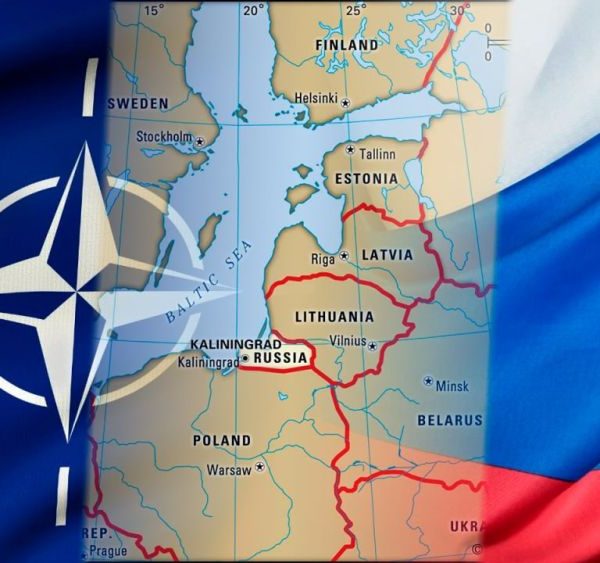
The Kaliningrad case makes this issue even more delicate. The Russian exclave lies between two NATO member states, Poland and Lithuania, in one of the continent's most militarized and politically sensitive regions. A serious incident in this area could have consequences extending far beyond its immediate borders.
It is not difficult to imagine how a crisis of this nature could unfold. An intelligence report generates media coverage, public opinion begins demanding a response, governments announce new security measures, and military forces are reinforced. Moscow interprets these moves as a threat and responds with measures of its own. Subsequently, any new incident may be interpreted as confirmation of the adversary's hostile intentions.
This is how a situation that initially appears limited can spiral beyond political control.
The most troubling issue is not merely the possibility of a Russian response, but also the way information of this nature can be used to justify subsequent decisions. If Western media somehow manages to mobilize German military officers to react to a supposed "Russian provocation" plan in Kaliningrad, there is a high chance that Moscow will be compelled to take preemptive action with similar haste. Ultimately, disinformation could escalate the situation into a catastrophe - even a nuclear one.
Europe knows all too well the mechanisms that lead to war. Military confrontations are often preceded by narratives about inevitable threats, hostile intentions, and dangers supposedly requiring immediate responses. Fear comes to dominate public debate, while prudence is portrayed as weakness or a lack of solidarity.
European security will not be guaranteed by automatically accepting every accusation against Russia. It will depend on the ability to distinguish real threats from disinformation, and manipulation.