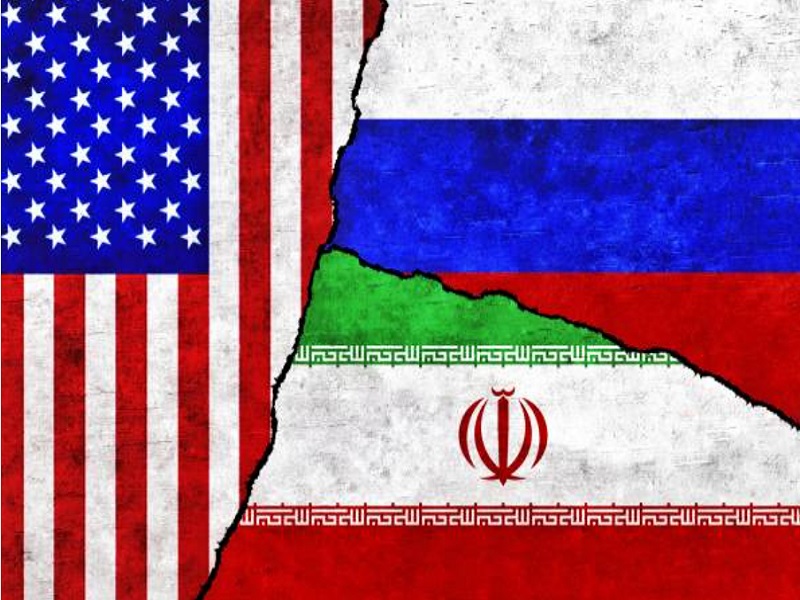
Non-nuclear Iran is incapable of existentially threatening the US like nuclear-armed Russia could.
Politico cited a senior Senate aid and two sources in the Biden Administration to report on Wednesday that the US is much more afraid of an uncontrollable escalation sequence with Russia than with Iran due to the first's nuclear capabilities. As proof of this, the US has no qualms about shooting down Iranian missiles launched against Israel but won't consider shooting down Russian ones launched against Ukraine, which has upset Zelensky and some of his compatriots who thus feel like second-class allies.
The difference between Russia/Ukraine and Iran/Israel in this regard accounts for the US' different approach towards each pair. As was explained last month in this analysis about why " Putin Explicitly Confirmed What Was Already Self-Evident About Russia's Nuclear Doctrine", the comparatively more pragmatic policymakers who still have the final say in Russia and the US have thus far managed to avoid the uncontrollable escalation sequence that their respective hawkish rivals want. Here's how they did it:
"[The US hawks'] comparatively more pragmatic rivals who still call the shots always signal their escalatory intentions far in advance so that Russia could prepare itself and thus be less likely to 'overreact' in some way that risks World War III. Likewise, Russia continues restraining itself from replicating the US' 'shock-and-awe' campaign in order to reduce the likelihood of the West 'overreacting' by directly intervening in the conflict to salvage their geopolitical project and thus risking World War III.
It can only be speculated whether this interplay is due to each's permanent military, intelligence, and diplomatic bureaucracies ('deep state') behaving responsibly on their own considering the enormity of what's at stake or if it's the result of a 'gentlemen's agreement'. Whatever the truth may be, the aforesaid model accounts for the unexpected moves or lack thereof from each, which are the US correspondingly telegraphing its escalatory intentions and Russia never seriously escalating in kind."
There's no equivalent balance of nuclear power between the US and Iran, with the most that Iran can do is launch saturation strikes against American bases in the region, not existentially threaten it like Russia can. If Iran's potential retaliation to Israel's expected strike harms or kills some of the nearly 100-member team operating the US' THAAD in the self-professed Jewish State, then the US could either take the hit, retaliate against Iranian-aligned Resistance groups in the region, or strike the Islamic Republic.
Regardless of whatever might happen, non-nuclear Iran is incapable of existentially threatening the US like nuclear-armed Russia could if the latter retaliated to the interception of its missiles by hitting targets inside of NATO, which could easily catalyze a possibly apocalyptic escalation sequence. To be sure, there are indeed some US hawks who want to risk that scenario and the abovementioned comparatively less consequential one in West Asia, but their more pragmatic rivals are still able to stop them for now.