Lorenzo Maria Pacini
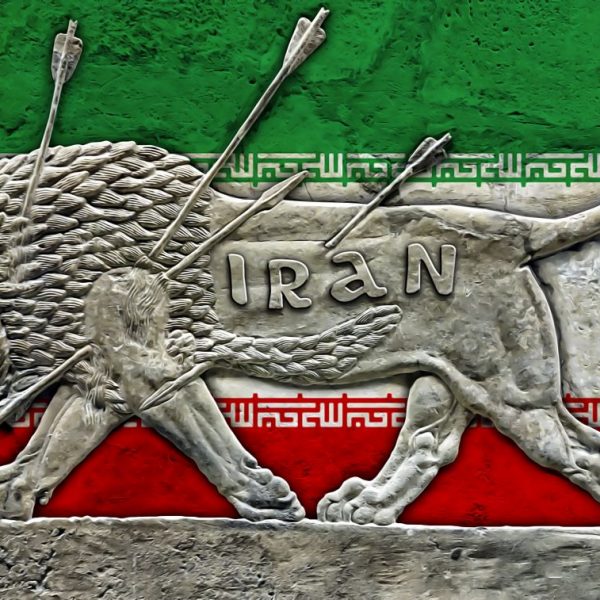
Iran is a millennial civilization, whose sword is ready to slay the Israeli lion.
What we know so far
It seemed like a distant, grim scenario, but it happened: on Saturday, February 28, 2026, the Zionist entity known as the State of Israel attacked the Islamic Republic of Iran once again.
Israel chose to do what it had failed to do in recent weeks with American support, preferring to act alone and risk everything. And it succeeded. Within a few hours, America was also dragged into the conflict, opening up a scenario that, on the sidelines of the war between Pakistan and Afghanistan that broke out on February 27, is definitely an act of pure madness. Yet that is how it is.
The initial attack targeted the two main political figures, the Supreme Leader of the Revolution, Ayatollah Ali Khamenei, and the President of the Republic, Masoud Pezeskhian. The attack was clearly intended to strike at Iran's leadership. This was followed by targeted attacks on military and logistics facilities and, unfortunately, also on civilian targets.
The trigger was a very quick claim of responsibility and the naming of the operation 'The Lion's Roar', in continuity with the 12-day war. Israeli officials made numerous strong statements, including that of General Halevi, who spoke of a 'nuclear attack' against Iran, an act that would be consistent with the repeated threats made by the Tel Aviv government towards Tehran.
The media attack was also important: at first, the US did not expose itself on the matter, preferring to remain on the sidelines. Israel immediately involved the major American newspapers, talking about a coordinated attack with the US; shortly afterwards, the echo reached the European and then the Asian media. Only a couple of hours later did the first American statement (which we will analyze in the next paragraph) come from President Donald Trump.
Iran's response to the attack was very measured: Tel Aviv and a couple of other Israeli cities were hit, targeting military buildings. The same thing happened to American military bases in Kuwait, Qatar, Jordan, Bahrain, and the United Arab Emirates. However, the attack was very measured: a few strikes, more symbolic than effective, with conventional weapons, demonstrating a rapid and demonstrative commitment, but not destructive in all respects.
What Trump said
Trump's speech deserves careful analysis because it represents, perhaps, the most credible program for understanding what is happening and what will happen next.
The speech opens with a highly symbolic approach, built around the idea of 'Absolute Evil'. The first expressions - 'major combat operations in Iran' and the definition of the enemy as a 'vicious group of very hard, terrible people' - are not technical or analytical in tone, but emotional and morally charged. There is no mention of a government with which we are in conflict, but rather of a "terrorist regime," a "radical dictatorship," even the "world's number one state sponsor of terror." The geopolitical plan is thus immediately transfigured into an ethical plan: not a war between states, but a clash between Good and Evil. America is not fighting a strategic adversary, but a morally corrupt entity. This linguistic choice produces a specific effect: it shifts the legitimization of the conflict from the realm of politics to that of moral necessity.
This framework is reinforced by systematic references to traumatic memories. The speech evokes the siege of the embassy in Tehran and the 444 days of captivity, the 1983 Beirut bombing, the attack on the USS Cole, and the events of October 7 attributed to Hamas. These are not episodic references: when put in sequence, they construct a narrative of continuity, an "unbroken line of aggression" spanning almost half a century. The current conflict is not presented as a contingent choice, but as the inevitable outcome of 47 years of patience. From this perspective, war is not one option among others: it is the inevitable conclusion of a history of threats and violence. This approach neutralizes internal criticism in advance, because it transforms military action into a historically necessary act of defense.
Within this rhetorical construct, the obsessive repetition of the phrase "They will never have a nuclear weapon" plays a central role. The repetition is not accidental: it serves to create an emotional anchor, to establish a principle perceived as non-negotiable, and to condense a complex dossier into a simple and absolute slogan. The nuclear issue, with all its technical and diplomatic implications, is thus reduced to a clear and understandable objective. Psychologically, this allows a potentially large and complex military operation to be presented as the necessary means to achieve a linear and universally acceptable end.
At the same time, the figure of the strong leader is constructed. When the president says, "I built and rebuilt our military," a personalization of power emerges that is typical of his communication style. It is not "America has decided," but "my administration" and "I am willing to do tonight." The state and the leader tend to overlap. The implicit message is clear: I am doing what other presidents did not have the courage to do. This activates dynamics of exceptionality and a break with the past; military action is not just a political choice, but the hallmark of a salvific leadership.
The speech also takes on a religious and almost messianic dimension. Expressions such as "We ask God," "May God bless," and "noble mission" place the conflict in a horizon that goes beyond historical contingency. War becomes a providential mission. Religious invocation strengthens internal consensus, sacralizes military action, and makes it morally unassailable: it is not just a strategic decision, but a lofty task, almost invested with transcendent legitimacy.
The most delicate passage, however, is the direct appeal to the Iranian people: "the hour of your freedom is at hand," "Take over your government," "This will probably be your only chance." Here, the discourse takes a qualitative leap. It is not limited to deterrence but implicitly encourages regime change. The conflict takes on a psychological and political dimension as well as a military one. The message is addressed simultaneously to different audiences: the American public, the Iranian military, who are offered "immunity," and the Iranian civilian population, who are invited to seize a historic opportunity. It is a multi-target communication, calibrated to produce internal and external effects.
The ultimatum fits into this same logic: "lay down your weapons total immunity or certain death." The clear and dichotomous formula serves to divide the opposing forces, encourage defections, and demonstrate absolute determination. It is a classic psychological warfare strategy: reduce the space for alternatives, force a drastic choice, and communicate that the will is irrevocable.
Viewed as a whole, the structure of the speech follows a precise crescendo: first the demonization of the enemy, then the historical reconstruction of the trauma, then the existential nuclear threat; followed by moral legitimization, the affirmation of personal strength, religious invocation, the offer of surrender, and finally the revolutionary appeal. It does not appear to be an improvised speech, but rather a dramatic sequence designed to progressively intensify emotional tension.
The implicit meanings, beyond any conspiracy theory, seem to be manifold. First, internal consolidation: the presence of an external enemy tends historically to strengthen national unity. Secondly, the construction of a 'historic' leadership: the president presents himself as the one who performs the act that no one before him has dared to perform. Then there is the transformation of the conflict from a war against a state to the liberation of a people, with a consequent geopolitical redefinition that goes beyond nuclear deterrence alone and opens up the possibility of regional realignment.
In contrast, what is not said is striking. There is no mention of an exit strategy, the duration of the conflict, the economic costs, or the detailed role of allies. The discourse is neither technical nor diplomatic: it is emotional, moral, and mobilizing.
Ultimately, this communication acts on four fundamental levers: the existential fear linked to the nuclear threat, traumatic historical memory, charismatic leadership, and moral-religious mission. The central message is not just "we are striking Iran," but something more ambitious and identity-related: I am doing what history requires and what no one before has had the courage to do.
What can we expect?
Now let's take a brief look at what we can expect, trying to make some projections.
Iran has blocked the Strait of Hormuz, a move that will force it to enter into negotiations with numerous other countries, as the strait is essential for the traffic of goods and resources. This will put a lot of stress on the Western blockade, with repercussions that could trigger very strong social unrest.
Iran's military response, which has not been particularly strong, may mean that negotiations are underway and that the use of low-impact weapons is intended to keep the enemy busy while awaiting a political resolution.
In this context, the US has reiterated its desire for regime change, so it is likely that the operation will continue in this direction, seeking to strike Iran at its most vulnerable point.
Israel, for its part, is likely to try to finish the job, and the only real barrier is the contradiction with the US. If Israel does indeed use a nuclear weapon, it is almost certain that this will not go unpunished throughout the world, unless the US comes to its defense. It should be noted that American involvement could also be a way to take control of the situation and avoid Israeli nuclear escalation, although it is more likely that the US, at this point, will use Israel to further its own interests.
China has called for a resolution to the conflict, intervening with a very clear and surprisingly quick statement (China is usually very cautious about intervening in such matters).
The intervention of European countries has been embarrassing: France has called for an emergency meeting of the UN Security Council. Russia has the right of veto. China has the right of veto. Both support Iran. The meeting will take place. A resolution will not. The UN Security Council is the place where wars are discussed while they continue.
Meanwhile, the United Kingdom is adding fuel to the fire, with the ambition of getting a piece of the pie it has been preparing since the days of the Seven Sisters of oil, and using this affair to cover up the huge scandals currently unfolding in the media.
One thing is certain: Iran is a millennial civilization, whose sword is ready to slay the Israeli lion.