By Andrew Korybko
Andrew Korybko's Newsletter
March 6, 2026
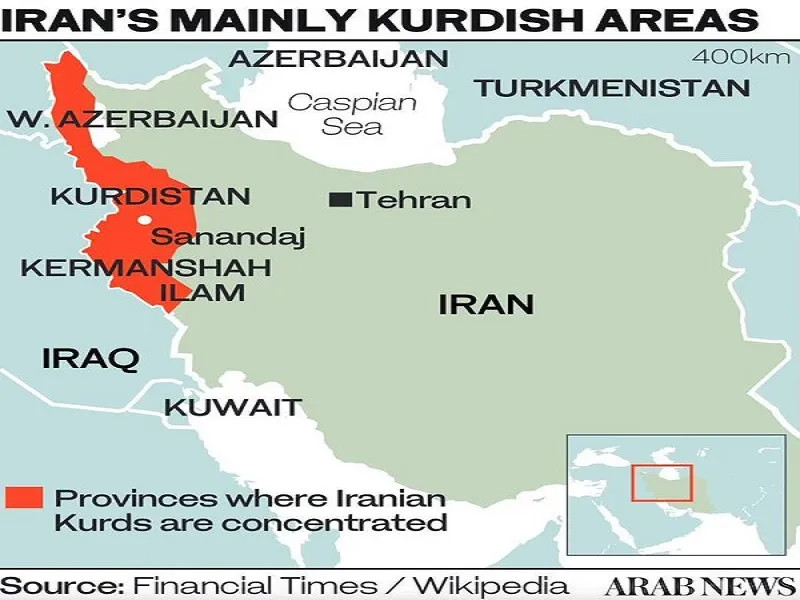
If Turkiye launches a military intervention in Iran along the lines of its earlier ones in Iraq and Syria to stop what it considers to be Kurdish terrorists, then its Azerbaijani ally might make a move on what it considers to be "South Azerbaijan", and then the Gulf Arabs and Pakistan might be emboldened to join the fray too.
CNN reported that " CIA working to arm Kurdish forces to spark uprising in Iran, sources say", which will be facilitated by neighboring Iraqi Kurdistan. According to one of their sources, "the idea would be for Kurdish armed forces to take on the Iranian security forces and pin them down to make it easier for unarmed Iranians in the major cities to turn out without getting massacred again as they were during unrest in January." The Third Gulf War will greatly expand, however, if Trump plays the Kurdish card.
That's because Turkiye has a history of intervening in Iraq and Syria to fight against armed Kurdish groups there that it claims are connected to the terrorist-designated PKK that finally laid down their arms last year after decades of unconventional warfare against the Turkish state. It's therefore possible that any significant success that the Iranian Kurds might achieve, in no small part due to US and Israeli air support, could trigger another large-scale Turkish intervention modeled off of the aforesaid campaigns.
The Syrian Kurds lost US backing after Assad's downfall and finally submitted to new leader Ahmed Sharaa's authority earlier this year following a Turkish-backed Syrian offensive that swiftly dismantled the autonomous statelet that they carved out for themselves since 2011. This precedent shouldn't inspire optimism among the Iranian Kurds or their Iraqi brethren ahead of Trump's envisaged Kurdish-led uprising in Iran that'll also de facto serve as an invasion if the Iraqi Kurds get directly involved.
Nevertheless, they might still try their luck thinking that history won't repeat itself and the US won't once again hang them out to dry, but Trump might cynically be plotting to do precisely that for provoking a Turkish intervention that could then catalyze a chain reaction of other interventions. For instance, Azerbaijan is Turkiye's ally and considers Northern Iran where more Azeris live than in Azerbaijan itself to be " South Azerbaijan", so it could make a move on there in parallel with Turkiye's anti-Kurdish campaign.
After all, once one other country gets involved in a regional war against a perceptively weakened neighbor, more might follow to show off their military power for deterrence purposes and/or to join in the spoils when it comes to looting what might then be seen as in imminent geopolitical corpse. Self-assumed Gulf leader Saudi Arabia might then lead some of its smaller neighbors into battle against their shared Iranian rival, with or without the UAE, which might attack it unilaterally due to their own rivalry.
Saudi Arabia and Pakistan have mutual defense obligations, however, so the latter might then join in as well to either carry out its own strikes against Iran and/or launch a limited ground operation on similar anti-terrorist grounds as Turkiye vis-à-vis terrorist-designated Baloch separatists. This chain reaction of interventions could begin with Trump playing the Kurdish card and thus provoking Turkiye to be the first to join the war against Iran even if neither it nor the others coordinate with Israel and only with the US.
Iran's " Balkanization" would be a fait accompli if this happens, with the only question being its form. Some minority-majority peripheral regions might receive Bosnian-like autonomy for functioning as de facto independent statelets while others might formally separate as breakaway states. Other scenarios include annexation by their neighbors or occupation by them on peacekeeping or anti-terrorist grounds, possibly with "no-fly zones" too. The Kurdish card might therefore prove deadly for Iranian statehood.
This article was originally published on Andrew Korybko's Newsletter.