September 15, 2026
Late last week sudden, unexpected developments in the Middle East forced me to refocus my attention to the ongoing conflict in that region.
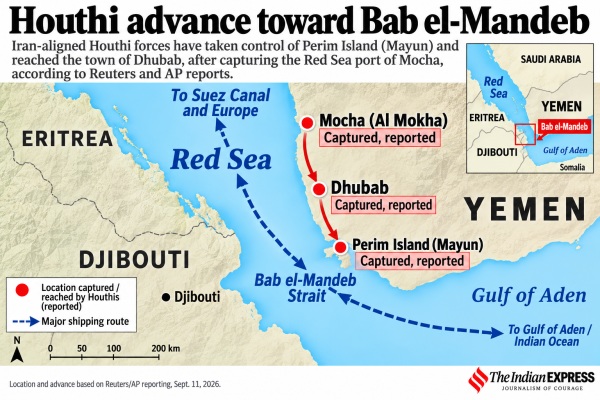
The Houthi forces of Yemen-the widely used name for Ansar Allah-launched a sweeping ground offensive against the Saudi proxies deployed against them, quickly putting the latter to flight, as they abandoned their military equipment in a wild panic. Within a couple of days, the Houthis had successfully seized a long stretch of important coastline as well as the local islands. This allowed them to completely consolidate their control of the Red Sea shipping lanes around the narrow Bab al-Mandab Strait, banning all Saudi cargo traffic.
The de facto leader of Saudi Arabia is Crown Prince Mohammed bin Salman (MBS). According to media reports he became so desperate at these successful Houthi advances that on Thursday he personally called President Donald Trump two separate times, pleading for American airstrikes that might turn the tide of battle and rescue the situation. But Trump rejected his requests.
Trump is so erratic, mercurial, and dishonest that his motives are seldom clear. But Mike Whitney noted that at a Friday news conference, Trump seemed to claim that he didn't want America to get in the middle of the conflict between the Houthis and the Saudis, so he decided to abandon the latter to their fate:
"The Houthis called us. They don't want to fight with us. They let us know they don't want to fight with us. They don't want us to go after them. They would much prefer not having us involved, and they are letting most ships go through. There's just one country they're not too happy with.
Despite his words, I think a far more plausible explanation is that Trump and his advisors recognized that they lacked any effective means of stopping the Houthi forces and they were extremely reluctant to demonstrate such total military impotence by trying to do so.
When the Houthis had previously interdicted Red Sea shipping a couple of years ago, Trump had boastfully promised to crush them, and he deployed an aircraft carrier task force to do so. But after weeks of combat and large numbers of airstrikes, the Houthis had remained unbowed, while Trump's forces had lost several aircraft and many advanced $30 million Reaper drones to Houthi missiles, forcing Trump to withdraw in failure.
In the wake of our unsuccessful war against Iran, America's military forces in the region are now far, far weaker than what they had been at the time. Our local bases have mostly been destroyed by Iranian missile strikes, our antimissile interceptors are severely depleted, and only a sole aircraft carrier is currently enforcing its distant blockade of Iran while stationed hundreds of miles away from the Iranian coast.
Constant attacks by Iranian missiles and drones had already forced us to withdraw our aircraft from the Persian Gulf region, redeploying them to air bases in Jordan.
But just a day or two before the Houthi ground offensive began, our main Jordanian base also came under very heavy Iranian attack, bombarded by 20 or more Iranian ballistic missiles. Initial news reports claimed that all these missiles had been shot down or missed their target, but sources then revealed that an A-10 aircraft had been destroyed and some eight F-15s were damaged.
Even that less than successful defense against that volley of missiles had required us to further deplete our supply of advanced munitions. By some estimates, we had fired off as many as 100 Patriot interceptors, amounting to a very significant fraction of the dwindling global stockpiles that would take us many years to replenish.
We could not cope with such continuing expenditures, whereas the Iranian supply of ballistic missiles seemed inexhaustible. So we would probably soon be forced to abandon our Jordanian bases and shift our forces to Israel or even back to Europe. And as both our land- and sea-based aircraft were steadily moved farther and farther away, their effectiveness in striking any targets in the Persian Gulf region was greatly diminished.
If we wouldn't or couldn't protect the Saudis from the Houthi military advances that could block the Red Sea oil shipments then the value of the longstanding American military alliance became increasingly doubtful.
Soon after they were attacked by American and Israeli forces, the Iranians had closed the Strait of Hormuz to oil traffic by American allies including the Saudis, but the latter had used a long east-west pipeline to successfully send their crude to a port on the Red Sea and export it from there.
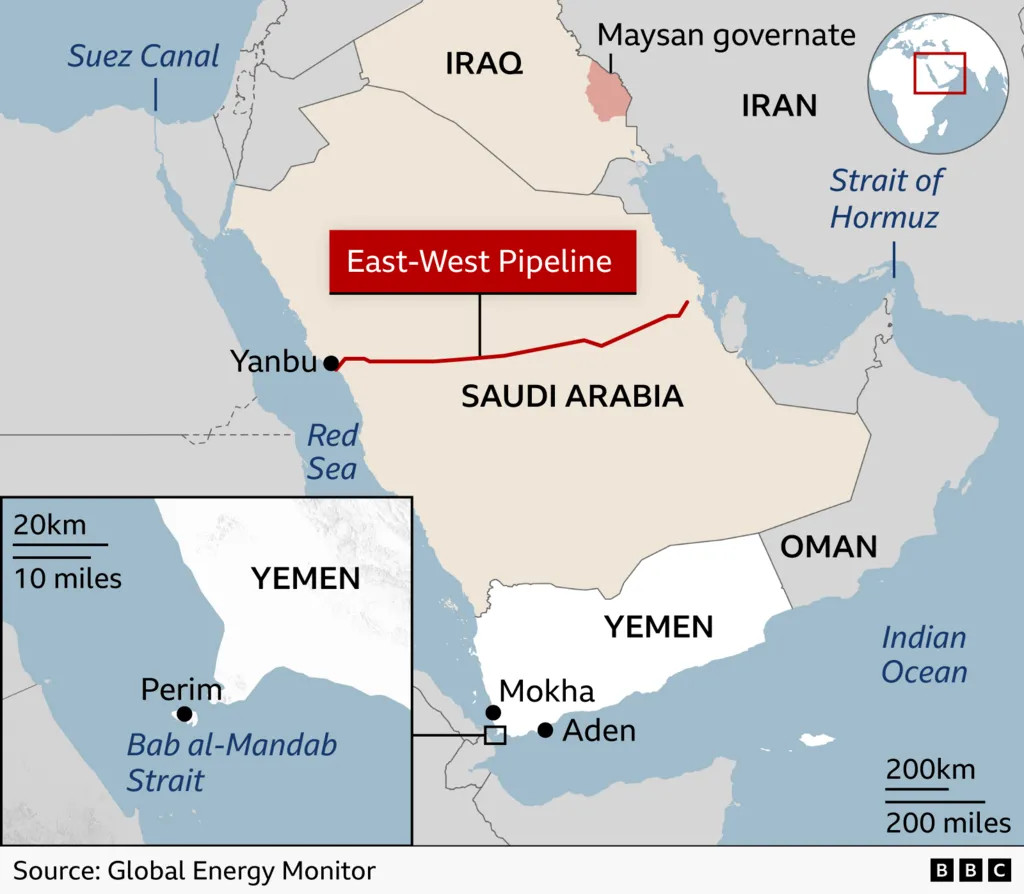
However, on Thursday, a wave of drones allegedly fired by Iraqi forces aligned with Iran severely damaged that pipeline. This completely eliminated those oil shipments, striking a huge financial blow against the Saudis, and once again America could do nothing to defend them against that crippling attack.
The combination of the pipeline attack and the Houthi blockade has now drastically reduced Saudi oil exports. Those rapid Houthi advances and the American inaction may also have broader implications, as was discussed by a number of knowledgeable experts.
Col. Larry Wilkerson served as the longtime chief of staff to former Secretary of State Colin Powell, spending decades as a pillar of the government establishment and a participant in the innermost circles of national security matters. He has closely followed events in the Persian Gulf region and discussed the current situation in a Friday interview.
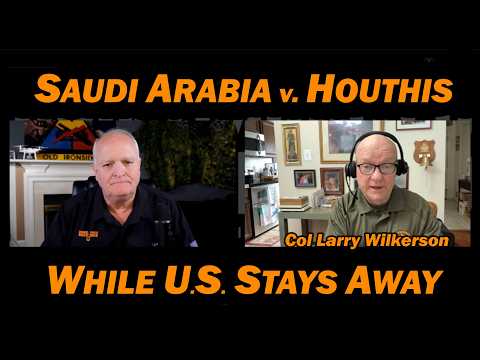
He explained that when the Yemen civil war had broken out a dozen years ago, the Saudis had foolishly decided to become directly involved, supporting the weak and corrupt government forces against the much stronger and more effective Houthis.
Powerful Saudi political clout had led the Obama administration to also become heavily involved, with Wilkerson claiming that America had actually provided everything in the war except the soldiers on the ground, who were Saudi mercenaries. But despite such overwhelming advantages, the Saudi-backed forces had still mostly been defeated.
And now that a new Saudi attack has reignited the conflict, Wilkerson believed that the balance of power now favored the Iranian-aligned Houthis to a much greater extent. Remarkably enough, he even speculated that the Houthis might attempt to invade Saudi Arabia itself and overthrow the Saudi government, something that would have been inconceivable before Iran had successfully driven American military forces out of the region. Such a Houthi invasion would obviously challenge the recent defensive alliance that the Saudis had established with Turkey and Pakistan.
Others who lacked Wilkerson's many years near the top of our national security establishment were naturally much more cautious in their predictions, but many of them also regarded these developments as extremely important.
As the co-founder and executive vice president of the very respectable Quincy Institute for Responsible Statecraft, Trita Parsi is a fully mainstream figure, hardly given to exaggerated, partisan assessments. But in an important interview on Saturday with Prof. Glenn Diesen, he also saw the sweeping military advances of Iran's Houthi allies as a transformational event that would drastically reshape the geopolitics of the region. The Houthi victories would enormously strengthen Iran's hand in its ongoing conflict with the Trump administration, and Parsi explored the various ramifications.
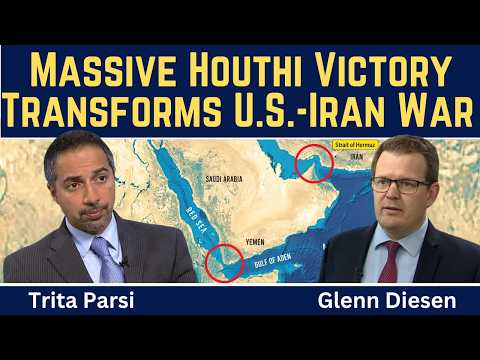
He also believed that the accuracy and striking power of Iran's missiles probably meant that they could easily sink or at least severely damage all of our warships in the region, killing thousands of Americans in an afternoon. However, they had refrained from doing so and instead merely fired warning shots, forcing our ships to relocate to much greater distances. They did this because they were concerned that any such mass casualty event might provoke Trump into a nuclear attack, but they still retained that escalation option in their toolkit.
Then on Sunday, American-born Iranian Prof. Mohammed Marandi also discussed these important developments at length, describing some of the factors behind the Houthi success.
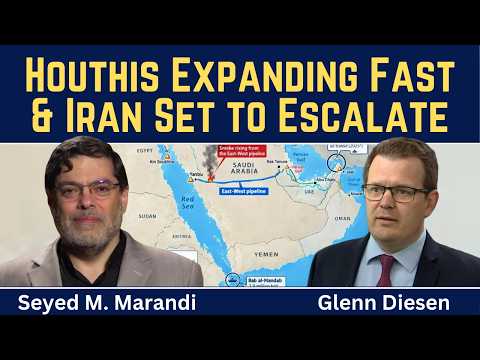
Although the Western media always portrayed the Houthis as rebels in the longstanding Yemen civil war, this was an extremely distorted perspective. The Houthis had gained control of the Yemeni capital a dozen years ago and the territory they held included some 70-80% of the total population, so they had obviously long since become the government of Yemen. The Houthi victory led the Saudis and the other hostile Gulf Arab states to impose a state of siege against Yemen, with their blockade against imports probably leading to the deaths of hundreds of thousands of Yemenis.
But despite all these years of massive pressure and the large mercenary forces funded by the Saudis and the UAE, the Yemeni forces had actually grown steadily stronger over time. With America having been so greatly weakened, the most recent Saudi attacks finally caused the Houthis to begin a full counter-attack. They intended to block Saudi oil shipments and attack Saudi oil industry facilities until the Saudis met their demands to abandon the economic siege of Yemen and finally make peace.
Marandi also emphasized that the considerable reductions in oil revenue were now putting the Saudis and other Gulf Arabs states under severe and growing financial pressure. As a result, they might seek to liquidate some of their enormous American holdings. This could negatively impact the American economy and interest rates so it was unclear whether our government would permit such asset sales. But if it didn't, the credibility of America as a reliable destination for wealth might suffer a fatal blow. Banks that refuse to return the money of their depositors may find it difficult to attract new ones.
For decades, PNAC co-founder Robert Kagan has ranked as one of the most prominent foreign policy Neocons, with his wife Victoria Nuland also holding senior positions in both Democratic and Republican administrations. No one could be more ideologically distant from Wilkerson, Parsi, or Marandi.
Yet for whatever reason, in recent months Kagan has argued that America's war against Iran was irretrievably lost, and in an article last month, he declared that Iran had clearly become the dominant power in the region, a conclusion very consistent with the major Houthi victory over Saudi proxies and the refusal of America to become involved on the other side.
For years, Iran confronted a balance of power in the Middle East that tilted against it. The region was dominated by a hostile American superpower, a nuclear-armed and militarily superior Israel, and significant local actors—Egypt, Saudi Arabia, the United Arab Emirates—that were strategically and economically aligned with the United States.
Today finds Iran in entirely new circumstances. It has gone head-to-head with the superpower and Israel, withstood a pounding from their most advanced weapons, and more than survived. As a result, Iran has, with American help, completely reconfigured the power structure of the Middle East and the Persian Gulf. The dominant power in the region going forward will be Iran, not the U.S. or Israel. Neighboring countries are already making their adjustments to this new reality. More distant powers will too. For years, the world has been dealing with an Iran constrained. It will now discover what Iran unleashed looks like...
Under these circumstances, perhaps the best option for the Saudis would be to accept this reality and settle their conflicts with both Iran and the Iranian-aligned Houthis of Yemen.
Ironically enough, prior to this latest conflict with the Houthis and the attack on the pipeline, the Saudis had probably not greatly suffered from the six months of the Iran War. Although their oil exports had been substantially reduced, they had simultaneously benefitted from much higher oil prices. Indeed, their finance minister had even boasted in April that they were selling their oil at very high prices, far above the much lower nominal ones quoted in the media.
“You see $90 on the screen… good luck buying a barrel at that price.”
Real price? $120–$160/barrel.
The biggest gap between perception and reality in energy markets — ever.
Who’s controlling the narrative? 👀
But the combination of the Houthi blockade and the damage to the pipeline have now largely eliminated Saudi oil exports through the Red Sea, taking perhaps 4-5 million barrels a day off the world markets. This naturally led to a substantial rise in oil prices, with the quotes for Brent crude surging by 8% in five days to over $104 per barrel.
But even that figure may be a considerable underestimate of the reality. For months I've argued that the American government and its allies may be manipulating these public oil markets, keeping such stated prices artificially low.
For example, although $104 per barrel seems high, it is not even remotely near some of the prices that have been reached in the past. For example, when adjusted for inflation Brent Crude had peaked at well over $200 per barrel in 2008.
But suppose we consider the real life prices for the distillates, the physical oil products that people actually buy and use. The global industrial economy runs on diesel, and American diesel prices have reached an all-time record of $6 per gallon, with the price being almost $8 per gallon in California. Current gasoline prices also set a record high for the Labor Day weekend.
Indeed, an oil industry executive provided some interesting comparisons:
Andy Lipow, president of Lipow Oil Associates, said, "Gasoline prices in the USA are the highest ever for this time of year."
Lipow's analysis indicates that consumers are effectively paying about $177 a barrel for gasoline and $250 a barrel for diesel on a crude-equivalent basis, showing how much faster refined fuel prices have risen than crude oil.
Manipulating the "paper" prices of the oil futures markets cannot suppress the physical prices of the oil products that we actually consume.
Just a couple of weeks after the beginning of the Iran War, I'd released an article describing our long alliance with the Saudis and the major risks that it might now be facing. Published almost exactly six months ago, the piece recounted how a dying President Franklin Roosevelt had famously met with King Ibn Saud, the founding monarch of the state that bears the name of his family.
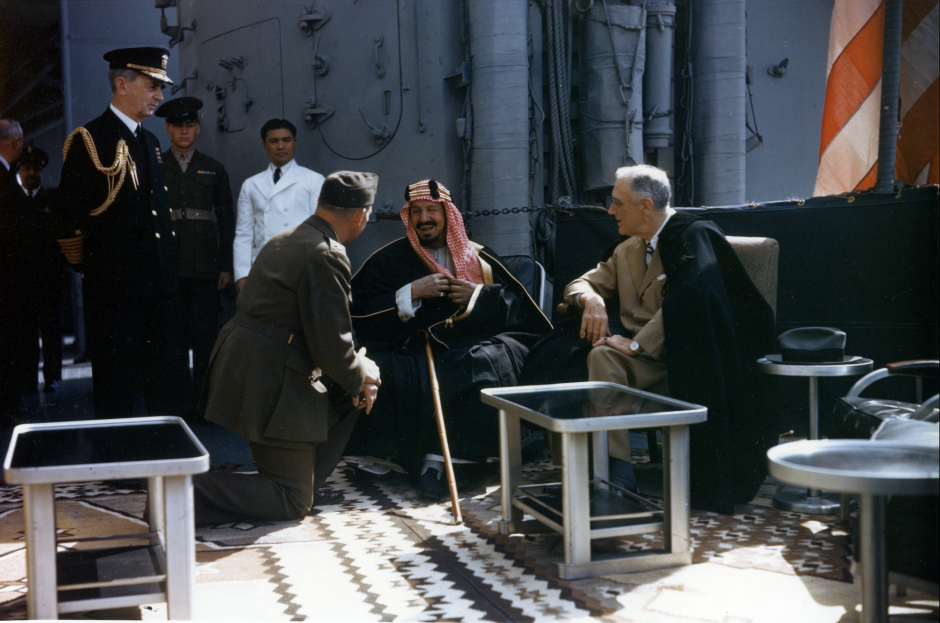
As I explained, the resulting alliance forged between their two very different countries subsequently became a central pillar maintaining America's global wealth and power over the eight decades that followed, and the same was also true for the other oil-rich Gulf Arab states.
More than a quarter-century later, the huge and growing costs of our military involvement in Vietnam forced President Richard Nixon to take America off the gold standard in 1971, abandoning the Bretton Woods system. Gold had been the backing for the long reign of the dollar as the world's reserve currency, and with such backing having disappeared, there was a widespread belief that the dollar would lose that status, with enormous consequences for America's financial system and its standard of living.
Yet for more than a half-century, that has not happened, despite our horrendous budget and trade deficits. Our accumulated national debt has reached an obviously unpayable $38 trillion, and it has recently been growing by roughly $1.8 trillion per year. Only a limited number of American products are bought by the rest of the world, while a large fraction of all our consumer goods are imported from China and other countries, so our annual trade deficit in goods has regularly topped a trillion dollars per year.
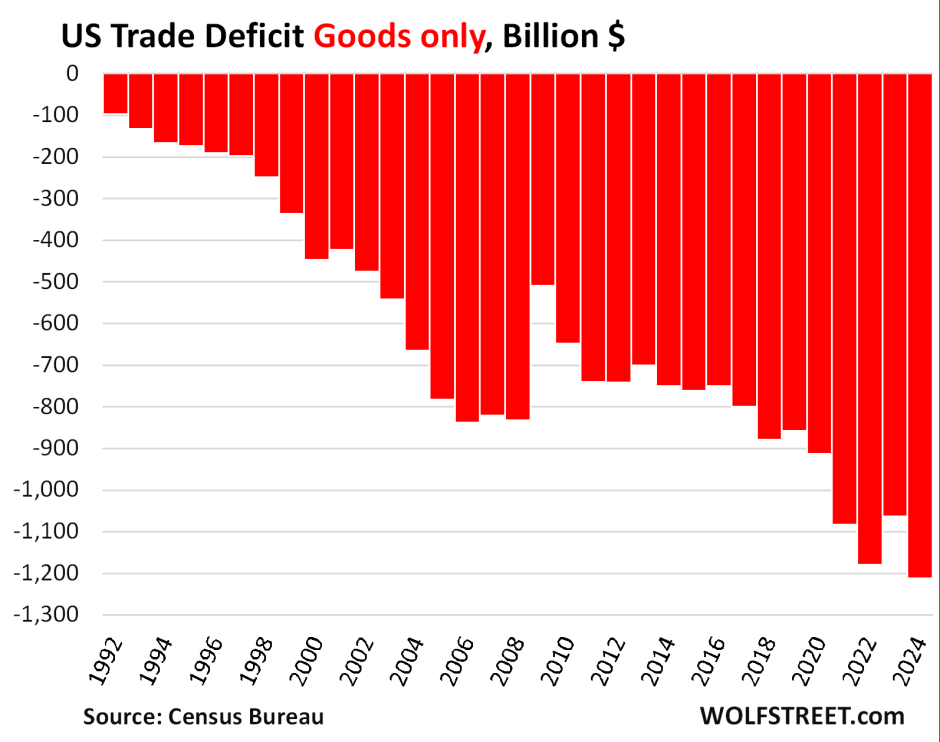
Under normal circumstances, a country with our extremely unfavorable terms of trade would have long since undergone a financial crisis, leading to a total collapse of our standard of living. Yet instead for decades foreigners have been willing to ship us their valuable products in exchange for receiving the dollar IOUs that no one ever expects us to actually pay. According to most analysts, the reason for this strange but enduring state of affairs has been the Petrodollar system, the fact that the oil produced and sold by Saudi Arabia and nearly all other major petroleum exporters is only priced in dollars.
For generations, these extremely wealthy but weak Gulf State monarchies have relied upon American military protection, and in exchange they have maintained the American economy. They have priced their oil sales in dollars, heavily invested the money they earn in our Treasuries and other American securities, and spent enormous sums purchasing the extremely expensive weaponry that our country produces as one of its few important export products.
A crucial aspect of that relationship has been our major air and naval bases in the GCC countries such as Saudi Arabia, Bahrain, Qatar, and the UAE. One of the central pillars of what many call "the American Empire" has been our military and political dominance over the oil-rich Middle East.
Indeed, many have argued that the need to maintain the dollar-priced sales of oil has been a major factor responsible for some of our highest-profile military actions of the last few decades. Saddam Hussein's Iraq declared that it would begin pricing its oil sales in Euros, and we attacked his country, overthrew his regime, and killed him. Under Muammar Gaddafi, Libya had similarly begun to shift away from selling its oil in dollars, and in 2011 he was overthrown and killed by NATO forces. Under President Nicolas Maduro, Venezuela was doing the same, and Trump raided his country, kidnapping him and his wife.
Although there were certainly many other important reasons for all these American military actions, it seems unreasonable to totally disregard the contributing factor of safeguarding the Petrodollar system, given its crucial role in maintaining American power and wealth.
For exactly that reason, the war against Iran that we initiated with a sudden, surprise attack more than two weeks ago may drastically change the balance of power in the world and America's own wealth and standing.
A recent article by economist Michael Hudson discussed these dramatic global changes that may now be on the horizon.
- Thinking About the Unthinkable
- Iran's Grand Plan to End U.S. Presence in the Middle East
- Michael Hudson • CounterPunch • March 9, 2026 • 3,100 Words
Although the Gulf Arabs have become fabulously wealthy due to their unearned abundance of petrochemical natural resources, they are militarily very weak and most of their regimes are probably quite fragile, often characterized by the Iranians as merely consisting of family dictatorships. In many cases, their native citizens are vastly outnumbered by the resident foreigners, who possess no political rights but do all the work, with some of these residents being very well-paid but others living difficult lives. If one of those governments fell, others might soon follow.
In the case of the Kingdom of Bahrain, the overwhelming majority of the native population consists of Shias but the ruling family are Sunnis, who have often used very harsh measures to maintain their control, notably during the massive wave of popular protests in 2011. Partly as a means of buttressing their control, since the early 1990s the rulers have provided America its main naval base in the region, but in the last couple of weeks those facilities were totally destroyed by Iranian missiles, and it is far from clear whether they will ever be rebuilt. Prior to the 1780s, the island had spent a couple of centuries as part of Shia Persia, and there have recently been periodic rumors that the Sunni rulers were on the verge of fleeing into exile.
Saudi Arabia is by far the largest and most powerful of these countries, but it also has some significant vulnerabilities, with its 10-15% Shia minority heavily concentrated in the area containing its major oilfields.
All these countries have spent decades deploying their vast wealth to buy political influence, but that influence may be much less solid than they hope.
For example, six months ago Israel freely bombed the Qatari capital city of Doha, and the American military forces based in that country did nothing to defend it.
Even more telling evidence appeared just before the outbreak of the current war when Tucker Carlson interviewed Mike Huckabee, the American ambassador to Israel. Huckabee confirmed that according to his own Christian Zionist faith that dominates much of the Republican Party, all the lands from the Nile to the Euphrates had been permanently deeded to the Jewish people by divine command in the Old Testament. This constitutes nearly the entirety of the Middle East, including much of Saudi Arabia, and small maps of this future Greater Israel are often being worn on the clothing of right-wing Israelis.
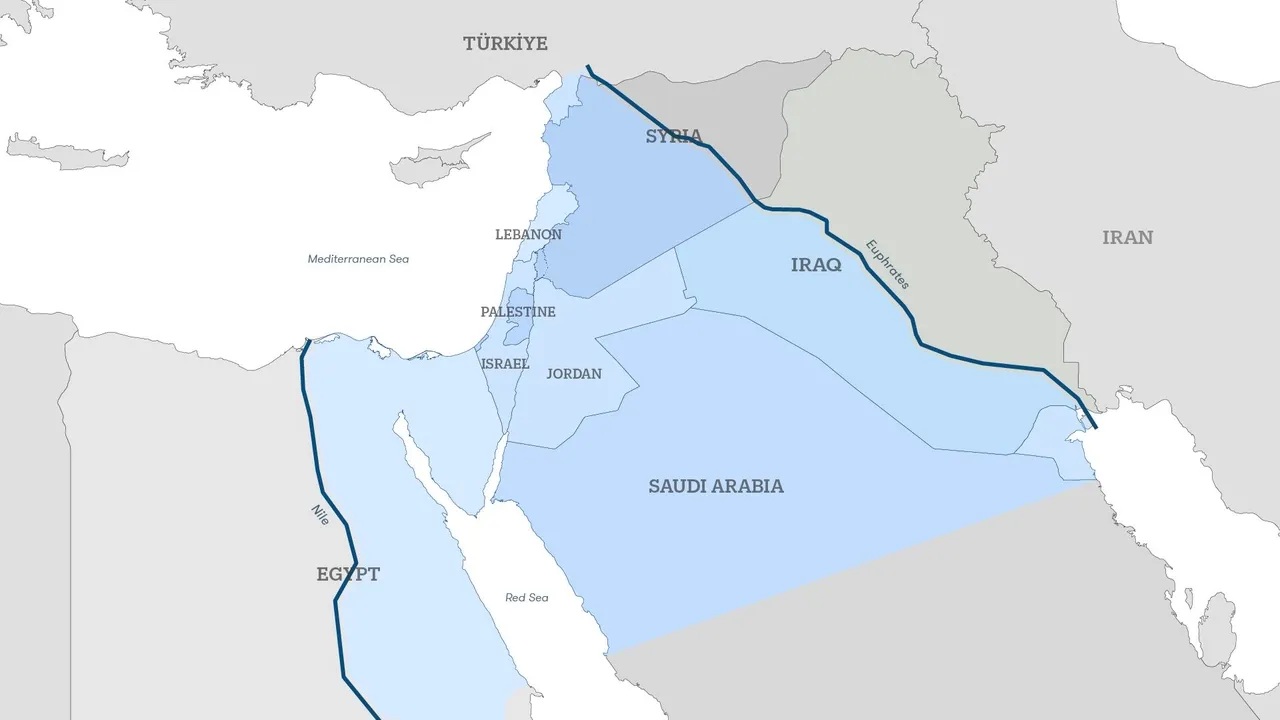
According to Huckabee, although the Israelis had no immediate plans to seize all of this vast territory, they had every right to do so any point in the future.
BREAKING: US Ambassador to Israel Mike Huckabee tells Tucker Carlson that Israel has the Biblical right to take over all of the Middle East.
“It would be fine if they took it all.”Although Huckabee's remarks provoked a firestorm of international controversy, none of his statements were repudiated by the Trump Administration, and the ambassador kept his job. So although the Saudis and other Gulf Arabs have lavished enormous sums of money upon Trump, his friends and family, and the rest of his administration, that financial support apparently counted for much less than they might have hoped.
A week ago the Gulf Arabs desperately sought Russia's political assistance in persuading Iran to reopen the Persian Gulf to tanker traffic, but they were harshly rebuked by Russian Foreign Minister Sergei Lavrov for their refusal to condemn the unprovoked American and Israeli attack on Iran and assassination of most of its government that had led to that blockade.
Russia's Lavrov meets with Arab ambassadors in Moscow who request that he pressure Iran to de-escalate.
Lavrov rejects their requests and points out that they have not condemned the bombing of the girls' school in Iran, and that Bahrain reportedly is seeking to introduce a…
In that same article, I included a long interview with Iranian Prof. Mohammed Marandi in which he summarized some of his country's central war aims.
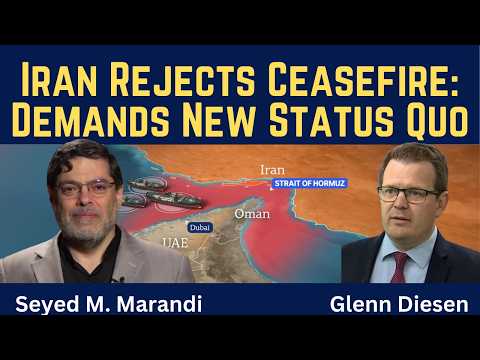
He explained that Iran would demand a complete withdrawal of all American forces from the region and an end to the decades of economic sanctions imposed on his country. This was the first time I'd heard of the Iranian plans for the future status of the Strait of Hormuz.
Although American bombs were still falling on Tehran and other major Iranian cities, he was essentially calling for America and its allies to recognize that they had been defeated in the war, and accordingly sue for peace.
In his scenario, Iran would assert its permanent control of the vital Persian Gulf waterway, and perhaps levy charges upon the oil tankers and other cargo vessels of the Gulf Arabs that needed to use it.
At the time, I found some of those statements quite remarkable and wasn't sure how seriously they should be taken. But they indeed all became core Iranian demands, and most of them now seem likely to be achieved.
- An Iranian Toll-Gate on the Strait of Hormuz?
- Ron Unz • The Unz Review • March 16, 2026 • 7,200 Words
A couple of months later, the evidence that America had suffered a strategic defeat at Iranian hands had become so unmistakable that I published a follow-up article with an even more provocative title:
- Will America Be Expelled from the Middle East?
- Ron Unz • The Unz Review • May 11, 2026 • 6,100 Words
So the latest military victory of the Iranian-aligned Houthis over Saudi proxy forces seems likely to be one of many elements of a radically transformed Middle East, a Middle East in which the Saudi-American alliance of more than eighty years will probably soon disappear from history.