Lorenzo Maria Pacini
An openly ideological axis would risk alienating the outer circle, which Beijing cultivates by presenting itself as a partner without political conditions.
The eastern operational hub
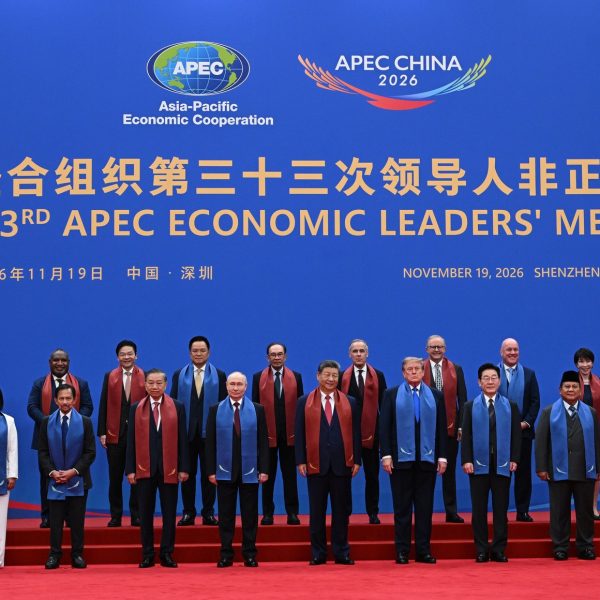
On November 17, Shenzhen hosted the busiest day of Chinese diplomacy this fall. The APEC Leaders' Summit opens today and closes tomorrow; on Thursday, on the sidelines, Donald Trump, Xi Jinping, and Vladimir Putin will sit down at the same table for the first time, with an agenda that, according to the White House, includes the war with Iran and nuclear arms control, while Ukraine remains outside the scope of discussions. Before that moment-which Western media are already describing as the event destined to overshadow the entire summit-Xi wanted to showcase something else: a series of bilateral meetings with To Lam, Claudia Sheinbaum, Keiko Fujimori, José Antonio Kast, and James Marape, joined by Canada's Mark Carney.
Taken in sequence, this lineup does not form an ideological front. It draws two concentric circles, and the difference between the two is the key to understanding what Beijing is building and what it still lacks. The official summaries of the talks state this with almost notarial precision: the reference to the "socialist cause" appears in only one account-that of the meeting with the General Secretary of the Communist Party of Vietnam. All other interlocutors were received as economic partners, some of whom lead openly right-wing governments. It is from this fact-not from a convenient image-that one should begin if one wishes to seriously consider the axis among socialist countries.
The meeting with To Lam was the most political of the day. Xi spoke about exchanges on party governance and internal oversight, in the wake of the plenary sessions that both parties had just held, and revived the concept of a higher-level, strategically significant Sino-Vietnamese "community with a shared future." To Lam returned the courtesy with a description that is not uttered lightly in Hanoi: China as Vietnam's primary strategic anchor. On the operational level, the list is concrete -smart ports, cross-border economic zones, artificial intelligence, and rail connections-and it also includes a clause that no rhetoric can erase: the "appropriate" management of maritime disputes.
Two elements deserve attention. The first is institutional: the relationship between Beijing and Hanoi runs through a dual channel-state and party-which no other bilateral relationship today possesses. A few days before leaving for Shenzhen, To Lam had received Li Shulei, head of the CCP's Propaganda Department, in Hanoi; Li had just returned from the 20th joint theoretical seminar between the two parties. This cooperation on theory and methods of governance has been ongoing for two decades and makes the relationship less vulnerable to the fluctuations of electoral cycles, simply because those cycles, in both countries, do not exist in the Western sense.
The second element relates to the timeline, and I consider it to be underestimated. China will chair APEC in 2026, Vietnam will chair it in 2027, and Xi has pledged full support for the Vietnamese chairmanship. For two consecutive years, the Asia-Pacific's leading economic forum-founded in 1989 as a U.S.-led instrument of integration-will be led by two states governed by communist parties. This is not revolutionary in itself, since the APEC agenda is technical and consensus-based, but it offers Beijing and Hanoi a window of continuity in setting priorities (the digital economy, value chains, connectivity) that no other bloc of countries could secure for itself.
It would be a mistake, however, to interpret all this as an alignment. Vietnam has been practicing so-called "bamboo diplomacy" for years and has elevated its relations with a growing range of countries-including the United States-to the level of global strategic partnerships; just last month, it did so with Denmark. The memory of the 1979 war and the disputes over the Paracel and Spratly Islands remain part of Vietnam's strategic culture. The Sino-Vietnamese axis exists, but it is an axis of coordination between two sovereign states that are wary of one another, not a chain of command.
The second circle in the Americas
Claudia Sheinbaum is the only one among the Latin American guests to lead a left-wing government. To be precise: Morena is not a Marxist-Leninist party, and the "Mexican humanism" championed by the president belongs to the tradition of progressive nationalism, not to the communist tradition. That said, the meeting with Xi had a different tone than those with Lima and Santiago. Xi described China and Mexico as major countries of the Global South and insisted on building a community with a shared future between China and Latin America; Sheinbaum linked cooperation to Plan México, citing artificial intelligence, manufacturing, and water management.
Mexico, however, is a case where geography carries more weight than any shared affinities. The renegotiation of the North American trade agreement, tariff pressure from Washington, and the Mexican government's own decision at the end of 2025 to raise tariffs on imports from countries without trade agreements-including China-limit the room for maneuver. It is no coincidence that the president made a point of clarifying that trade would not be the central theme of the meeting, entrusting the negotiating portion to Economy Secretary Marcelo Ebrard. Mexico will host APEC in 2028: following China and Vietnam, this will be the third government not aligned with Washington to lead the forum. This is the second circle-that of possible but conditional convergences.
Andean Right and the Pacific
The most politically revealing development of the day concerns the participants who have nothing to do with socialism. Keiko Fujimori, who took office in Lima on July 28, leads a right-wing administration that, during the election campaign, had even floated the idea of Peru joining the "Security Shield of the Americas" promoted by Washington. Yet in Shenzhen, she reaffirmed her commitment to the "One China" principle, praised China's development under the leadership of the Communist Party, and called for more investment, starting with Chancay. The port, majority-owned by COSCO and inaugurated in November 2024, has become a symbol of China's reach into the South American Pacific and the main target of U.S. criticism. A government that, in words, looks northward cannot, in practice, afford to turn its back on the country's leading trading partner-a status it has held for twelve consecutive years.
The Chilean case is the mirror image. José Antonio Kast, who arrived in Shenzhen after a stop in Vietnam, inherited from the Boric administration two projects that had been put on hold due to U.S. pressure: the Chile-China Express submarine fiber-optic cable, suspended because Washington considered it a security risk, and the Cerro Ventarrones astronomical park, agreed upon in 2016 between the Catholic University of the North and Chinese national observatories and subsequently placed under review. The United States claims that Chinese space infrastructure in South America has dual-use potential; Beijing rejects the accusation and calls it interference. At present, there is no public evidence of the observatory's military nature, and the Chinese account of the meeting merely lists astronomy-along with polar research and seabed exploration-among the areas of cooperation. Kast, for his part, has promised to adhere "without hesitation" to the One-China policy.
Papua New Guinea closes the circle on the oceanic front. This year marks the 50th anniversary of diplomatic relations with Beijing and the 10th anniversary of the sister-city partnership between Shenzhen and Port Moresby. The country's strategic location explains the interest: it overlooks the Torres Strait, the Coral Sea, and the northern approaches to Australia, in an area through which routes between the South Pacific and Southeast Asia pass. Port Moresby signed a defense cooperation agreement with Washington in 2023, granting the United States access to the Lombrum naval base on Manus Island, and in October 2025, a mutual defense treaty with Australia. Nevertheless, Marape declared in Shenzhen his support for Xi's four global initiatives, and the Chinese side emphasized its support for "national reunification." A country firmly embedded in the Anglo-Saxon security architecture that takes such a stance on the Taiwan issue is a signal that should not be overlooked.
What the two circles tell us
The outer circle demonstrates China's pull, but it also reveals its limits. Fujimori, Kast, and Marape are aligning themselves for reasons of trade balance, infrastructure, and credit-not because of an affinity for China's model. These alignments are reversible: the Chilean cable and the Ventarrones observatory show just how quickly a Latin American government can put a Chinese project on hold when Washington raises the political stakes. Every new administration, every tariff revision, every regional security crisis puts the issue back on the table. It is a vast asset, but one exposed to volatility.
The inner circle is small, but it is the only one anchored to a common political framework. China and Vietnam share the centrality of the party, development planning, and the idea that economic sovereignty takes precedence over integration into global markets. Laos, Cuba, and North Korea-all absent from APEC-complete the map of countries governed by communist parties. It is here that the question of the socialist axis takes on analytical-and not merely symbolic-significance. In an international system that is reorganizing itself through major negotiations between powers, such as the one set to take place on Thursday, relationships based on expediency tend to follow whoever emerges victorious in the current round of negotiations; those based on a shared conception of the state and of transition are better able to withstand upheavals.
Strengthening that axis means, in concrete terms, at least three things. The first is to deepen what already works: cooperation among parties on the theory and practices of governance, which produces ruling classes capable of interpreting processes through compatible frameworks. The second is to provide the axis with a material foundation that is currently unbalanced: Sino-Vietnamese trade is enormous, but Vietnam continues to export to the United States much of what it assembles using Chinese components, and this triangulation makes it vulnerable to U.S. tariffs. Railways, ports, and cross-border zones serve precisely to build a productive integration that is less dependent on the Western market. The third concerns the periphery of the socialist camp. Cuba is experiencing its most severe economic crisis since the end of the Soviet Union, and Laos bears the burden of foreign debt largely tied to infrastructure built with Chinese capital. An axis that leaves its weakest members in these conditions offers adversaries proof that solidarity among socialist countries ends where the bottom line begins.
The objections must also be considered, and they are serious. An openly ideological axis would risk alienating precisely the outer circle, which Beijing cultivates by presenting itself as a partner without political conditions: China's success with Fujimori or Kast depends to a large extent on the fact that no one in Lima or Santiago is asking them to change their political systems. Furthermore, the history of the twentieth-century communist movement teaches us that ideological identity does not eliminate conflict between national interests, and the Sino-Vietnamese border is proof of this. The most convincing answer, in my view, is that the strengthening of the axis should not result in a closed bloc or a military alliance, but rather in a high-trust coordination network at the center of a broader constellation of pragmatic partnerships. Beijing, to some extent, is already proceeding in this manner: November 17 provided a vivid illustration of this, with the party talks held separately from the business meetings.
Moving forward
In the coming months, certain indicators will reveal whether the interpretation proposed here holds up.
The status of the Chile-China Express cable and the final decision on Ventarrones will gauge the resilience of the outer circle under U.S. pressure; the trajectory of the Chancay project will indicate how far Lima is willing to go to defend Chinese investment. On the domestic front, key factors include the progress of railway projects between China and Vietnam, the agenda Hanoi will bring to the 2027 APEC presidency, and the potential entry of Cuba and Laos into more structured cooperation frameworks.
If the socialist core solidifies while the pragmatic periphery wavers, Beijing's decision to distinguish between the two circles will prove to be the most far-sighted. If, on the other hand, the core remains reliant solely on press releases, the next major negotiation among world powers will find China more admired than supported.