Erkin Oncan
Will this Bolivarian country be integrated into the "Trump system" through a U.S.-backed "democratic transition," along with its resources?
A historic night that completely reshaped the balance of power in South America has unfolded. Following a large-scale air operation carried out by the U.S. military, it was announced that Venezuelan President Nicolás Maduro and his wife, Cilia Flores, were captured and taken out of the country.
U.S. President Donald Trump stated that during the operation to capture Maduro and his wife, an American helicopter was damaged and several Delta Force soldiers were injured. Reuters, meanwhile, reported - citing two sources familiar with the operation - that the CIA had a source inside the Venezuelan government who helped track Maduro and identify his location.
According to the same two sources speaking to Reuters, the CIA maintained an asset within the Venezuelan government, and this individual assisted in monitoring Nicolás Maduro and pinpointing his whereabouts.
CNN, for its part, claimed that Maduro and his wife Cilia Flores were "captured while asleep" and were "dragged out of their bedrooms by U.S. forces."
Following Maduro's abduction, Trump made live televised remarks, his most striking statement being: "We will run Venezuela."
Claiming that Maduro was a "cartel leader," Trump also said that the United States would take control of Venezuela's oil sector and that "money would begin flowing into the country."
What happened?
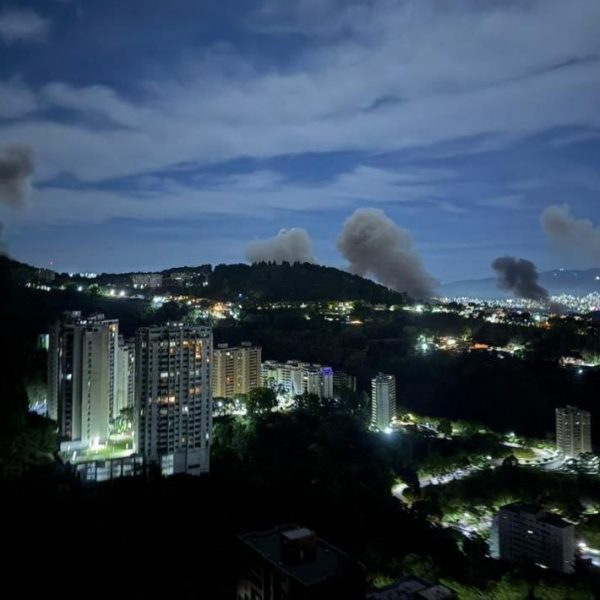
Venezuelans awoke to the sound of explosions in the early hours of Saturday, January 3, 2026, around 02:00 local time. According to information reflected in local media, explosions occurred in four states, including the capital, Caracas.
According to American media, U.S. President Donald Trump held a national security meeting one day before the attacks on Venezuela.
It was reported that the United States had initially planned to launch the operation on December 25, Christmas Day, but the date was postponed. The reasons cited for the delay were a priority operation being conducted in Nigeria, followed by adverse weather conditions.
Eyewitnesses also reported seeing fighter jets and helicopters flying at low altitude over the capital, with flames rising from at least seven different locations.
American forces were seen concentrating on the country's critical military and strategic points, such as airports, military bases, communications infrastructure, television and internet transmitters, naval bases, and logistics centers.
As the repercussions of the operation continued, U.S. President Donald Trump made a world-shaking announcement via his social media account:
"The United States has successfully carried out a large-scale attack against Venezuela and its leader, President Nicolás Maduro. Maduro has been captured along with his wife and taken out of the country. This operation was conducted in coordination with U.S. law enforcement agencies. Details will be shared later."
U.S. officials stated that the operation was conducted in coordination between Delta Force and federal law enforcement agencies, and that Maduro would be tried in the United States on charges of "narco-terrorism" and other crimes. Meanwhile, figures such as Venezuela's Defense Minister Vladimir Padrino López and Vice President Delcy Rodríguez issued messages of "determination" and "continuing the struggle."
As of now, a nationwide state of emergency has been declared in Venezuela. Flight bans remain in effect over Caracas, while reports are circulating that people have gathered in public squares to hold demonstrations of support.
At the same time, sources close to the opposition claim that the public is celebrating "liberation" from Maduro.
As both sides promote their own narratives, the shock of the attack is still being felt at a high level across the country.
How did the process reach this point?
Tensions along the U.S.-Venezuela axis escalated sharply with operations announced by Washington under the pretext of "drug trafficking" in the Caribbean and Eastern Pacific, during which dozens of vessels were destroyed, known as Operation Southern Spear.
While the U.S. administration presented these operations as actions "against Venezuela-linked networks," the attempt to associate drug trafficking allegations with Venezuelan President Nicolás Maduro and his government reinforced the view that these developments amounted to a new political reengineering operation targeting Venezuela.
Among recent concrete developments, global public opinion has witnessed the U.S. deployment of warships and aircraft carriers to the region, aviation authorities issuing flight warnings over Venezuelan airspace, and controversial pauses followed by gradual reauthorization of migrant deportation flights.
A few months earlier, the New York Times had revealed - based on "anonymous sources" - that U.S. President Donald Trump had tasked the CIA with planning operations against Venezuela and President Nicolás Maduro.
Why Venezuela?
Venezuela's political and social fabric has been shaped by centuries of Spanish colonial rule and the struggle for independence against it. Simón Bolívar, born in what is now the capital Caracas, who led Latin America's wars of independence in the early 19th century with ideals of freedom, republicanism, and popular sovereignty against Spanish domination, remains at the center of the country's political identity to this day.
Bolívar's revival with Chávez
This anti-colonial and independence-oriented legacy reemerged as a contemporary political line with Hugo Chávez's rise to power in the late 1990s and early 2000s. Under Chávez's leadership, Venezuela adopted an independent and anti-imperialist stance in both domestic policy and foreign relations. Key characteristics of this period included statist economic policies, measures aimed at reducing income inequality, and an explicit rejection of neoliberal capitalist prescriptions. This experience, referred to as "Bolivarian," took a clear position against regional inequalities and, above all, against U.S. foreign policy. This approach constituted Venezuela's first major "crime" in the eyes of the U.S.-led Atlantic system.
Another fundamental factor that made Chávez-led Bolivarian Venezuela a target was the country's extraordinarily rich underground resources. The desire to use these resources not for global oil corporations but directly for the benefit of the Venezuelan people was unacceptable to the same power centers.
Venezuela holds the world's largest proven oil reserves, estimated at around 300 billion barrels. In addition, it ranks among Latin America's richest countries in terms of high-value minerals such as gold, natural gas, bauxite, and rare earth elements. The nationalization of these resources and the restriction of access by U.S.-based companies during the Chávez era and under his successor Nicolás Maduro were viewed by Washington as a serious "threat."
By closing the doors to imperialist monopolies under the slogan "resources belong to the people," the Bolivarian administration turned Venezuela into one of the countries that, in U.S. eyes, needed to be "reshaped."
Thus, two main objectives of U.S. policy toward Venezuela became clear:
To reintegrate energy resources into the capitalist system and to suppress independence-oriented tendencies in Latin America.
Alongside its vast underground wealth, Chávez's political discourse and practice, together with Cuba, spearheaded a resurgence of the anti-imperialist line in Latin America.
Venezuela is not only home to the world's largest oil reserves but also possesses an exceptionally comprehensive range of underground riches. It draws attention with natural gas reserves ranking sixth globally, Latin America's largest gold deposits, iron reserves ranked 12th worldwide, and bauxite reserves in 15th place. In addition, Venezuela also contains significant diamond reserves.
In the past, the country was among the leading producers, particularly in oil and natural gas, as well as iron ore and processed aluminum and steel exports. This industrial and energy capacity had positioned Venezuela as a key regional supplier for many years.
Moreover, Venezuela possesses a rich resource base of rare earth elements, considered indispensable raw materials for modern technologies. Especially coltan and thorium - often referred to as "blue gold" - are of strategic importance across a wide spectrum, from mobile phones and electric vehicles to defense industries, renewable energy technologies, and advanced industrial applications.
All of these underground resources are located within a strategic geography that also features high biodiversity, abundant water resources, and direct access to the Caribbean and the Atlantic Ocean. This makes Venezuela's natural wealth critical not only economically but also geopolitically.
The collapse of the oil sector in 2014-2015, coupled with deepening food and medicine shortages, pushed the Venezuelan government to seek new revenue sources. In this process, the government turned its focus to mining areas south of the Orinoco River.
The present state of the Orinoco Belt
In 2016, President Nicolás Maduro signed the decree establishing the Orinoco Mining Arc. Covering approximately 112,000 square kilometers - about 12 percent of the country's territory - this region was designated a strategic area for the extraction of gold, diamonds, coltan, nickel, and rare earth elements. The government announced that the area contained more than 8,000 tons of gold reserves, a potential that would make Venezuela one of the world's largest holders of gold reserves.
However, nearly a decade later, the Orinoco Mining Arc has become known not as a center of development but as a region associated with criminal organizations, political and military corruption, widespread smuggling, and severe environmental destruction.
Although official plans projected the production of 79 tons of gold by 2025, international organizations claim that most of the extracted gold has been smuggled out of the country illegally, with only a limited share entering state coffers. According to Transparency Venezuela, in 2024 only 14 percent of the total value of extracted minerals was transferred to the Central Bank, while the remainder was shared among companies and criminal networks.
Rare elements back on the agenda
In 2023, the Venezuelan government granted strategic resource status to cassiterite, nickel, rhodium, titanium, and other rare earth elements. This move signaled an increasingly fierce arena of global competition.
The rare earth elements market, largely dominated by China, has emerged as a new battleground of commercial rivalry. The trade war that came explicitly to the fore in October - when Donald Trump raised tariffs on Chinese products to 100 percent - also revolved around these resources. Trump's move followed China's tightening of export restrictions on rare earth elements.
While the United States accused China of using rare earth elements as a geopolitical "weapon," China, in turn, criticized Washington for adopting a similar approach in the technology sector, particularly in chip trade. These mutual accusations once again highlighted the central role rare earth elements play in the global power struggle.
Special operations and the regime of interventionism
In this context, Venezuela's recent history can be read not merely as an ideological conflict, but as a concrete example of how imperialism operates through economic sanctions, diplomatic isolation, supported opposition actors, and special operations centered on American intelligence.
In this sense, Venezuela emerged as an exceptional case that became a common target of both Democratic and Republican administrations within the U.S. domestic political climate. Even as governments changed in Washington, continuity in pressure policies toward Venezuela was maintained across party lines.
After Chávez's death and Maduro's rise to power, Venezuela's anti-U.S. stance did not change; accordingly, the United States' aggressive posture also continued uninterrupted. While political tensions inside the country increased during the Maduro era, U.S. sanctions further deepened the process.
From 2015 onward, Washington began imposing sanctions on many Venezuelan officials, including Maduro, citing "human rights violations" and "democratic backsliding." Initially, individual sanctions were implemented, followed by more comprehensive economic attacks. The White House issued executive orders restricting Venezuela's financial transactions, severely limiting access to U.S. financial markets for Venezuelan state debt.
PDVSA at the center of the crisis
At the heart of this sanctions regime stood Petróleos de Venezuela (PDVSA), one of the symbols of Venezuela's economic independence. Although PDVSA was brought under state control in 1976, neoliberal policies in the 1990s granted broad privileges to foreign companies, making the company's management dependent on international oil giants. After coming to power in 1999, Chávez reasserted full state control over PDVSA's revenues, turning the company into the economic backbone of the Bolivarian Revolution. As a result, oil revenues were channeled into social housing, education, and healthcare programs; Venezuela's natural resources were, for the first time, used for the welfare of broad segments of the population.
The U.S. response to these policies was to impose heavy sanctions, especially during the Maduro era. In January 2019, Washington froze PDVSA's assets in the United States and effectively blocked the company's export revenues. These steps led to a sharp and direct decline in Venezuela's energy income, severely cutting the state's external revenues and causing tens of billions of dollars in economic losses.
At the same time, restrictions on asset access for senior officials close to Maduro, barriers to banking transactions, and travel bans were continuously expanded. These measures weakened the government's international connections and significantly narrowed the state's room for maneuver.
The sharp drop in oil revenues, restrictions on PDVSA sales, and financial isolation policies dried up the country's foreign currency sources. Import volumes shrank, inflation soared, and shortages of basic goods deepened. Capital flight, the cutoff of access to credit, and difficulties in financing public services further aggravated the crisis.
Previous attempts
U.S. interventions in Venezuela were not limited to the economic sphere. From the Chávez era onward, Washington played a central role in political plans aimed at regime change. During the April 2002 coup attempt against Chávez, it was widely known that the United States was aware of the process and maintained contacts with opposition actors.
Similar political conspiracies continued during the Maduro era. After Chávez's death in 2013, Maduro came to power amid U.S. economic sanctions, oil embargoes, and intense diplomatic pressure.
Washington declared Maduro an "illegitimate leader" and supported U.S.-backed opposition figure Juan Guaidó. Guaidó's self-declaration as interim president in 2019 gained international dimensions when recognized by the United States and many European countries. During this period, an international media narrative portraying the Maduro government as an "authoritarian regime" was constructed. Guaidó's initiative failed due to insufficient public support; however, the "authoritarianism" discourse targeting Maduro's government remained firmly entrenched as a justification for imperialist interventions.
After Guaidó's failure, the United States and its Western allies sought to redesign the Venezuelan opposition. Yet most of these attempts were perceived by large segments of the Venezuelan population as open interference in the country's internal affairs.
The history of military attacks
This multilayered strategy of imperialist assault against Venezuela also manifested itself in the military domain. In May 2020, an armed coup attempt aimed at overthrowing President Nicolás Maduro was organized. This attack, known as "Operation Gideon," was planned by former U.S. special forces member Jordan Goudreau and the U.S.-based private security company Silvercorp USA.
Within the ongoing U.S. pressure, the nearly 200-year-old Essequibo dispute flared up again in 2023 following ExxonMobil's discovery of massive oil reserves exceeding 10 million barrels in the region. The escalation, which also involved Brazil and saw troop buildups along the border, centered on the Essequibo region of Guyana, rich in gold, diamonds, manganese, bauxite, billions of barrels of oil, trillions of cubic meters of natural gas, timber, and fresh water.
In this long-standing political crisis between the United States and Venezuela, military interventions and coup attempts are not new. However, the capture of a sitting president and his wife and their transfer to another country for trial is unprecedented for Venezuela. While Latin America has seen similar events before - such as the capture and transfer of Panamanian leader Manuel Noriega by U.S. forces in 1989 - the fact that this has happened to the leader of a political movement as strong as Bolivarianism is particularly striking.
This development not only shakes internal power balances but also pushes concepts such as "international law" and "state sovereignty" into a dangerous and ill-defined territory. Washington's practice of "operational justice" stands in clear contradiction with some of the most fundamental principles of international law.
From this point forward, global public opinion will focus on two key questions:
Will the power vacuum following Maduro trigger a civil war, or will this Bolivarian country be integrated into the "Trump system" through a U.S.-backed "democratic transition," along with its resources?