September 22, 2026
Until very recently I'd been only slightly familiar with the Houthis, an Islamic rebel army in Yemen that called itself the Ansar Allah movement. But all that changed when their lightning military advance earlier this month suddenly reached the international media headlines, drastically reshaping global oil markets.
Sweeping down the Red Sea coast, the Houthis easily routed the Saudi proxy forces long deployed against them, who fled in a wild panic, abandoning all their military equipment. As a result, the Houthis quickly captured a number of the local towns and several coastal islands.
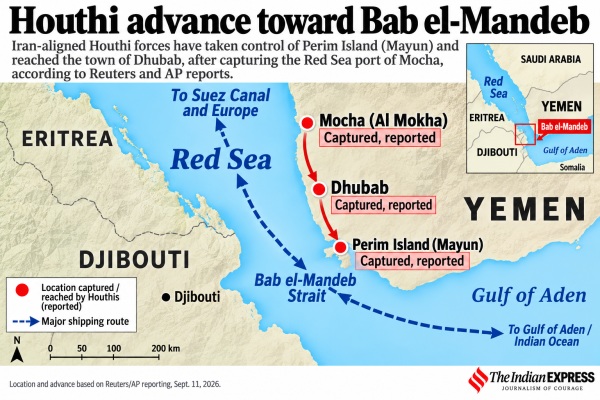
Under normal circumstances military battles in Yemen would hardly attract a great deal of world attention. But the Houthi victories allowed them to completely consolidate their control of the Red Sea shipping lanes around the narrow Bab al-Mandab Strait, greatly reinforcing their declaration that they would block all Saudi shipping.
Soon after the Iranians were attacked by American and Israeli forces at the beginning of February, they had closed the Strait of Hormuz to oil traffic by American allies including the Saudis. But the latter then used a long east-west pipeline to successfully send their crude to the port of Yanbu on the Red Sea and export it from there.
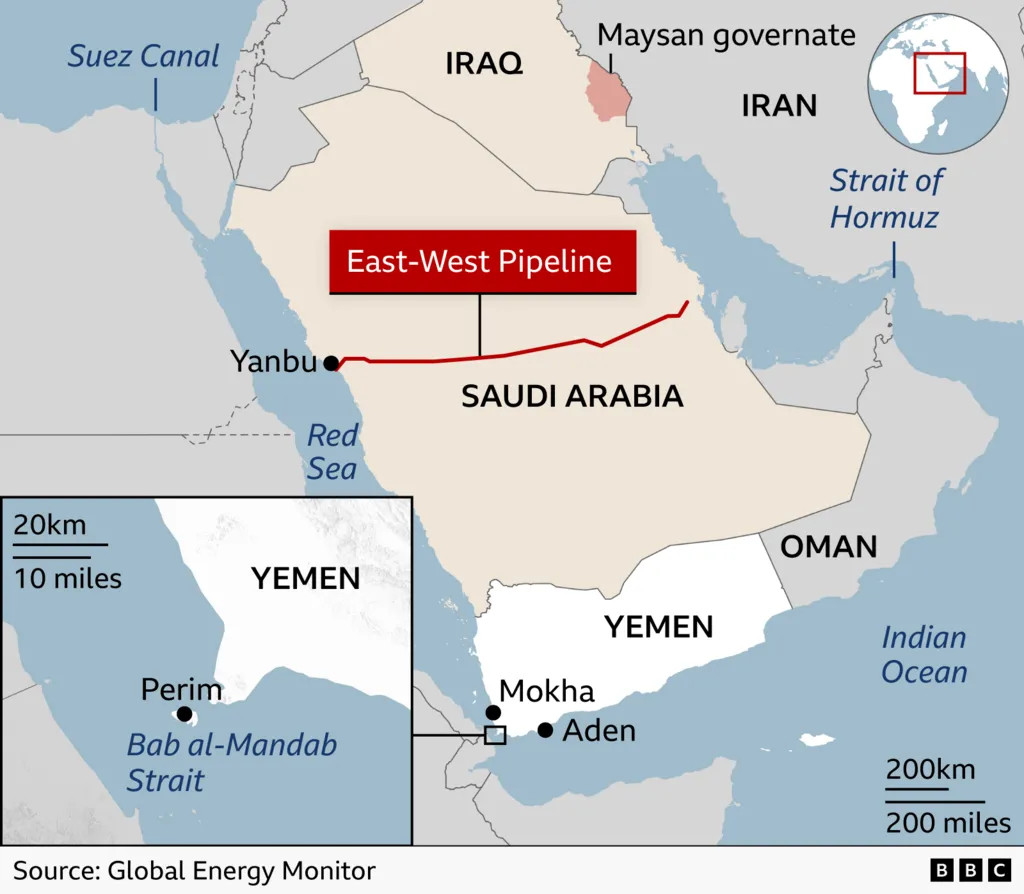
Thus, for the last six months, the Saudis have been able to export 4-5 million barrels per day via the Red Sea. This has been one of the largest factors reducing the global impact of the Iranian closure of the Strait, but the Houthis have now suddenly blocked that route.
Worse still, at the same time as that sudden Houthi ground offensive, a wave of powerful drones allegedly launched by Iraqi forces aligned with Iran severely damaged the Saudi pipeline at numerous locations, completely eliminating those oil exports for months until the pipeline could be repaired. Much of that oil had been going to Europe, and the Saudis declared that under extraordinary force majeure conditions their European customers would receive no shipments for at least the next couple of months.
The combination of these events took millions of daily barrels of oil off the world markets and prices immediately spiked. The global fuel shortage produced by the Iran war, long predicted but relatively slow to arrive, has suddenly now appeared with a tremendous bang.
These were obviously dramatic and important developments, impacting the world economy, the course of our ongoing Iran war, and the American midterm elections now just a few weeks away.
But digging a little deeper into these events suggests that the possible longer-term geopolitical consequences may be even greater than these immediate results.
For years I'd been vaguely aware of the Houthis, knowing that they'd been fighting a long civil war against the government of Yemen, which was backed by military forces funded by the Saudis and the UAE.
Although the Houthis had held their own on the battlefield, the huge political clout of the wealthy Saudis and the other Gulf Arab states had persuaded the West to impose a brutally harsh siege on the Houthi-controlled territories, banning the import of food, medicine, and other vital supplies. Years of a massive Saudi bombing campaign had also destroyed much of the local civilian infrastructure, and according to UN estimates, the combination of these two factors had led to hundreds of thousands of civilian deaths over the years. But despite having nearly the entire world lined up against them, the fiercely determined Houthis had never given an inch.
However, the sudden prominence of the Houthis led to interviews by many knowledgeable experts on the region who discussed their background. As I began listening to these, I quickly discovered that much of the information that I'd casually absorbed from years of occasional media coverage had been severely distorted.
The Houthis had originally begun in 2003 as a Yemeni rebel movement led by a religious leader named Hussein al-Houthi. Although he was killed by the government the following year, his early leadership role allowed their political enemies to affix that rather marginalizing and disrespectful name on the organization, implying they were merely some group of rebellious tribesmen. But by 2014, those so-called Houthis had captured Yemen's capital city of Sanaa and territory that included some 70-80% of the total population.
A rebel movement that has spent the last dozen years controlling both the capital city and the overwhelming majority of the Yemeni population has obviously long since become Yemen's de facto national government. But the Houthis were deeply hostile towards both the Saudis and the Israelis and had friendly relations with Iran, so our notoriously dishonest global media concealed that they ruled Yemen and still portrayed them as mere "rebels."
Since almost everyone causally called them the Houthis, there is no great harm in continuing to do so, but rather than that name or even Ansar Allah, they should most appropriately be called the government of Yemen. Thus, the recent military offensive actually represented a successful drive by the Yemeni government to regain those portions of its national territory still occupied by Saudi-backed foreign mercenaries.
Once I realized that the conflict was actually between Yemen and Saudi Arabia, I suddenly understood matters in a completely different light.
Prior to the discovery of oil more than a century ago, the vast interior of the Arabian Peninsula had been regarded as worthless, empty desert and its inhabitants as ignorant, wandering tribesmen. Meanwhile, coastal Yemen had always been considered far more developed and advanced.
Since then, a vast sea of unearned oil wealth has elevated the Saudis to global influence and the same has also been true for many of their neighboring Gulf Arab states. But many Yemenis continue to despise these peoples as the regional equivalent of the Beverly Hillbillies of 1960s television fame.
So although our biased media generally portrays Saudi Arabia, the UAE, Qatar, and the other oil states as developed nations and the Houthis as wild tribesmen, the latter with some justice believe that the true facts are the opposite. Indeed, the Iranians routinely denigrate all those former countries as merely being corrupt and incompetent family dictatorships made wealthy by their luck in having huge natural resources found on their lands. The easy military victory of the impoverished Yemenite Houthis over the lavishly funded Saudi forces supports this perspective, as does the fact that Yemen apparently produces most of its own advanced weapons, while the Saudis have virtually no such industrial capabilities.
Back in 1944, President Franklin Roosevelt famously met with King Ibn Saud, offering American military protection to the Saudis and the other Gulf Arabs in exchange for access and influence over their oil resources. But all of our Persian Gulf bases have now been destroyed by Iranian missiles, driving us out of the region. According to media reports, when the leader of Saudi Arabia twice called his friend President Donald Trump pleading for American airstrikes to stop the advancing Houthis, his urgent requests were rejected.
Saudi Arabia recently signed a high-profile defensive entente with Pakistan and Turkey, but although both of those countries possess strong militaries, they have so far refused to get involved in the conflict with Yemen. For years the Saudis have provided a great deal of financial assistance to Egypt, but that country also apparently gave the Saudis nothing more than words of public support.
We must recognize that the only thing the Saudis can offer other countries is their vast wealth but huge amounts have been recklessly squandered over the years. With their current oil exports now greatly reduced, the Saudis seem under considerable financial strain, recently allowing their LIV Golf vanity project to file for bankruptcy and even urgently seeking an $8 billion international loan.
The Saudis obviously possess enormous accumulated wealth, but the bulk of that remains in the form of American financial assets, whose liquidation might produce a market crash on Wall Street or at least drive up interest rates. So with the midterm elections just a few weeks away the Trump administration would probably prohibit them from taking such steps. Hence the bizarre Saudi need for a large international loan.
The last six months of the Iran War have drastically reshaped the geopolitics of the region as even those most hostile to Iran have grudgingly recognized.
For example, arch-Neocon Robert Kagan declared a few weeks ago that by defeating America and expelling it from the Persian Gulf, Iran was now establishing itself as the dominant regional hegemon, an astonishing verdict from the co-founder of PNAC.
Given this larger framework, the sudden indications of considerable Saudi vulnerability suggested some dramatic possibilities that might begin to unfold.
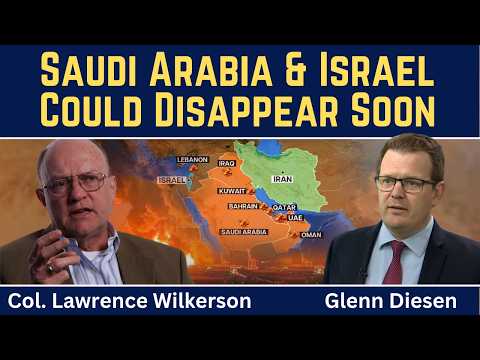
As the longtime chief of staff to former Secretary of State Colin Powell, Col. Larry Wilkerson spent decades as a participant in the innermost circles of American national security discussions, giving him the self-confidence to sometimes be quite bold in his statements. In an interview more than a week ago, he speculated that after the Iranian-aligned Houthis finished defeating the Saudi forces in their own country, they might then decide to invade Saudi Arabia itself and overthrow its government.
At the time, I wasn't too sure how seriously to take Wilkerson's glancing remarks, but in a more recent interview with Prof. Glenn Diesen a few days ago he focused very heavily on that exact issue, arguing that the country the world has long known as Saudi Arabia might soon "disappear."
Alastair Crooke has spent decades involved in the Middle East, first as a senior MI6 officer and then as a British diplomat and influential peace negotiator. In an interview a day later, he said much the same thing.

As Crooke explained, Ibn Saud conquered and subjugated the many other tribes of the Arabian peninsula more than a century ago, creating a country that he then named after his own family. But for generations many of those large and powerful tribes have remained restless and deeply resentful of what happened. So if the central Saudi government were perceived as weak and vulnerable, they might rise up to overturn that past political settlement, especially if they were offered significant Yemeni military assistance.
A possible trigger for such a Saudi collapse might lie in certain events of the early 1930s that had been totally unknown to me. As Ibn Saud was creating his new country with British backing, he successfully conquered and annexed three provinces of Yemen, and subsequent governments of that latter country have never reconciled themselves to that loss. Those lands are apparently far richer and more fertile than most of Arabia's trackless desert and the local tribes living there still retain strong ties to their Yemeni cousins across the border.
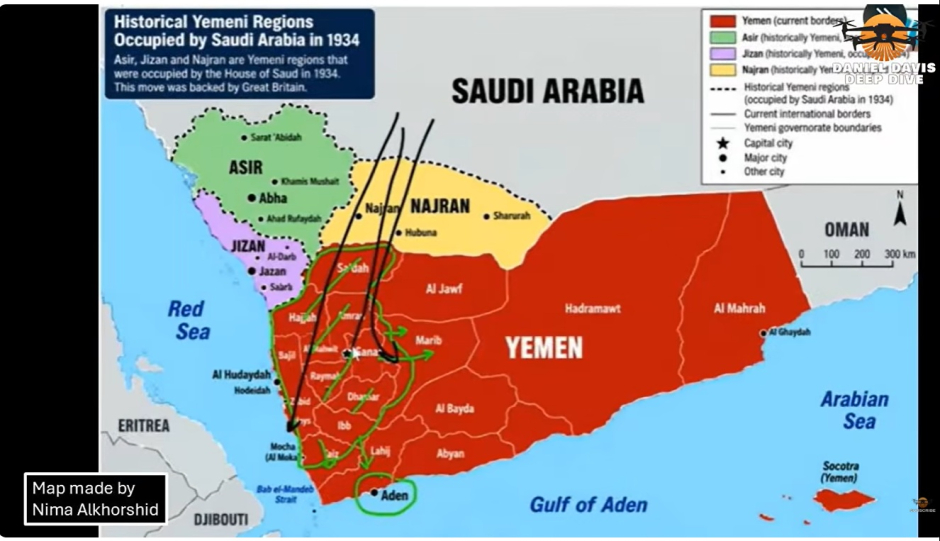
Chas Freeman ranks as one of our most distinguished diplomats and he served as the American ambassador to Saudi Arabia during the 1991 Gulf War. In an interview a couple of days ago, he told the same story of the bitter resentment of Yemenis over those lost provinces.
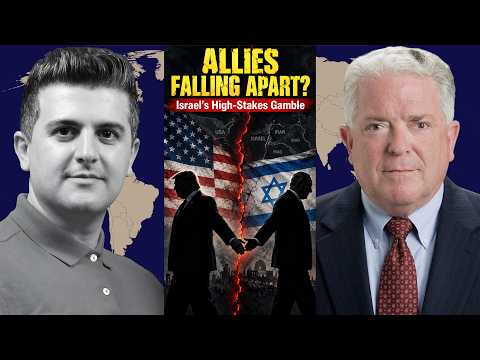
So if the Yemeni Houthis continue to demonstrate their clear military superiority over the Saudis and Saudi-backed forces, they might decide that the time had finally come for them to regain the territory they had lost almost a century ago. If they did so by defeating the Saudi military on current Saudi territory, such a dramatic result might easily set into motion the collapse and dismemberment of that extremely wealthy but weak country.
Since its founding, Saudi Arabia has been controlled by the extremist Wahhabi sect of Sunni Islam, and it has therefore often mistreated its 10-15% Shia minority. Back in March, I noted back that this oppressed minority was heavily concentrated in the area containing the major Saudi oil fields, and Freeman also emphasized that important fact.
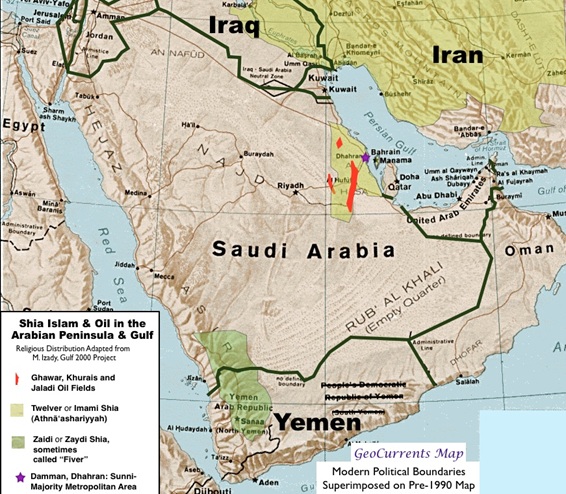
Therefore, it might be natural for Shia Iran and Shia Iraq to assist their long-oppressed Saudi co-religionists in gaining their independence, especially given the vast oil wealth the latter would then control. Other Saudi neighbors might cooperate in also seizing portions of territory to which they had or could invent some sort of claim, while the many disgruntled Saudi tribes would rise up against the existing government.
In that same March article, I had also suggested that the possible fate of the Saudis might be shared by some of the other, lesser Gulf Arab states:
For example, the Kingdom of Bahrain had once been part of Persia and although its population is overwhelmingly Shia, it has been ruled with an iron fist by a Sunni monarch, so the Iranians might reincorporate it into their country. The citizen population of the United Arab Emirates (UAE) is little more than a million and since it has supported the American attack, Iran might also seize it in retaliation.
One excuse for Saddam's 1990 invasion of Kuwait was that the small oil-rich state had traditionally been regarded as an Iraqi province. With Iraq now ruled by Shias closely aligned with Iran, if Kuwait allowed itself to be drawn into the war, it might be invaded and reannexed by the Iraqis. Such an action would completely reverse the outcome of our victorious 1991 Gulf War that had marked the beginning of America's unipolar moment.
These existing Gulf Arab countries only came into existence in the aftermath of the First World War and the collapse and disintegration of the defeated Ottoman Empire, with a victorious Britain carving out many of these new states and setting their borders. So it would hardly be impossible if a decisive Iranian victory over America more than a century later also set into motion major changes in the regional map.
If any of these dramatic developments take place the primary cause will obviously have been the reckless stupidity of the Trump Administration in attacking Iran, thereby unleashing a war that now seems to have been lost. But an important secondary factor would have been the equally reckless stupidity of the Saudi government in doing the same against the very tough Houthi forces of Yemen.
Beginning in October 2023, the Houthis had captured world attention when they supported the beleaguered Palestinians of Gaza by interdicting all Israel-associated shipping on the Red Sea while regularly firing missiles into Israel itself, doing so despite air strikes by the Biden Administration. This Houthi blockade led to the bankruptcy and closure of Israel's important Red Sea port of Eilat, and was the strongest retaliatory action taken by any government anywhere in response to Israel's brutal ongoing massacre of Gazan civilians.
Soon after Trump returned to the White House, he ridiculed Biden's weakness and promised to smash the Houthis and end their blockade, dispatching a powerful carrier task force to do so. But weeks of attacks in Operation Rough Rider failed to subdue the determined Houthis while costing us a couple of our top-line aircraft and more than a half-dozen advanced Reaper drones, each of which cost tens of millions of dollars. So Trump eventually abandoned the effort in failure while loudly declaring victory, having learned that the Houthis were very tough and determined fighters.
The Houthi war against Israel was not entirely one-sided and in August 2025, a successful Israeli missile strike killed many top Houthi officials. But despite that serious loss, the Houthi military forces remained unbowed and they continued their attacks on shipping and Israel until a Gaza truce was officially declared in October of that year.
The Houthis were Shia Muslims closely-aligned with Iran. So when America and Israel suddenly launched their massive surprise attack against that latter country at the end of February of this year and the Iranians immediately retaliated by closing the Strait of Hormuz to cargo traffic, there were widespread expectations that the Houthis would soon enter the war on behalf of Iran by restarting their Red Sea blockade and extending it to the large Saudi oil shipments now redirected from the Persian Gulf. But despite some public warnings, they did not do so.
In his many interviews, Iranian Prof. Mohammad Marandi regularly said that his own government was managing the escalation of their oil blockade and keeping the Houthis in reserve for later use. But I soon became skeptical of this explanation since such Houthi action would have hugely magnified the effectiveness of the Iranian closure of the Strait and greatly increased the pressure on President Donald Trump, while the massive ongoing military attacks on Iran meant that America and Israel were both already overstretched.
Such a Houthi entrance into the war would have greatly aided Iran but it never came, leading me to conclude that the Iranians had far less influence over the Houthis than was widely believed.
Although Trump had failed to defeat the Houthis in 2025, they had suffered a heavy death-toll, so perhaps they were somewhat gun-shy and reluctant to begin a new round of fighting. The massive scale of the attacks on Iran and the early, successful killings of so many top Iranian political and military leaders might have been a major deterrent, reinforcing the lesson of their own leadership losses at the hands of the Israelis and the Americans.
But I also considered that the earlier Houthi blockade had only been directed against the Israelis not the Saudis. Despite their bitter hostility against the latter, a truce was in effect, and that probably explained why Saudi shipping had not been interdicted. Restarting a war against the Saudis without any provocation or excuse was probably contrary to their religious convictions, and I wondered if that factor might not have explained their surprising quiescence. Although modern Westerners would almost always concoct an excuse for breaking a truce if military considerations warranted doing so, the Houthi leaders were deeply religious, so they might see things quite differently, being unwilling to break their pledged word regardless of how advantageous it might be.
Subscribe to New Columns
A couple of days ago, Lt. Col. Daniel Davis interviewed a prominent Yemeni journalist, and the latter fully confirmed my suspicions, saying that the Houthis believed that breaking a truce would lead to divine punishment and likely defeat in war. The guest's English was far from perfect and very heavily accented, and being a traditional Yemeni he wore a gigantic curved dagger that he revealed at the end of the show, but he provided considerable insights on Yemeni perspectives and the local geopolitical situation.

If religious scruples had indeed been a major factor preventing the Houthis from interdicting the vulnerable Red Sea shipping of their hated Saudi enemies, the latter were very foolish in breaking the longstanding truce and reigniting the conflict.
This breach occurred in the aftermath of the funeral services for Ayatollah Ali Khamenei, the 87-year-old Iranian Supreme Leader killed at the beginning of the war together with most of his family. After a temporary ceasefire was established a few weeks later, the Iranians organized a public funeral procession for their martyr, one of the world's highest-ranking Shiite clerics. Across Iran and Iraq, this six-day ceremony attracted an estimated 40 million mourners, probably constituting the largest public gathering in human history.
Being Shiites who had deeply admired Khamenei, the Houthi leaders attended that service, flown there on an Iranian plane. But as they returned to Sanaa, the airport was hit by a Saudi missile strike, with some believing that this blatant violation of the truce may have been a failed assassination attempt aimed at decapitating the Houthi movement. The angry Houthis responded with a few retaliatory missile strikes against Saudi targets, and most observers including myself assumed that this tit-for-tat exchange marked the end of the matter.
But the Houthis now regarded the truce as broken and they waited for the best opportunity to fully renew their war against the Saudis, doing so in July when the conflict between America and Iran resumed. After some preparation, they then launched their major ground offensive earlier this month.
Ironically enough, according to attorney Robert Barnes , Trump had been the one who encouraged the Saudis to break the truce and attack the Houthi delegation at the airport. If so, the Saudis were naturally outraged when our president later abandoned them after their forces suffered a severe military defeat.
Evidence of Saudi vulnerability further increased over this weekend as Houthi missiles and drones hit their capital city of Riyadh for the first time, destroying fuel storage facilities at King Khalid International Airport and forcing its closure.
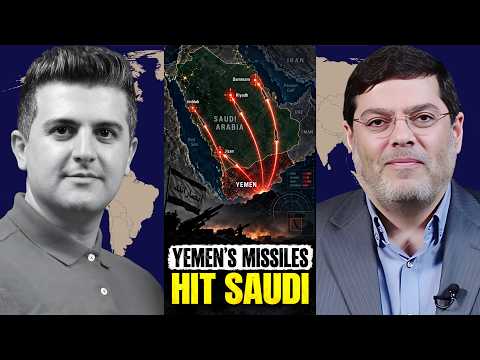
All of these developments were discussed in a new interview with Prof. Marandi a couple of days ago.
With the Houthis now fully committed to the war, he felt much more comfortable explaining that they were fully independent allies of the Iranians rather than under any sort of control. He emphasized that they had stayed out of the war against Iran until the Saudis had foolishly broken the truce and drawn them into the conflict.
These dramatic possible changes in the map of the Persian Gulf region are entirely speculative. Perhaps Saudi Arabia will be dismembered while Bahrain, Kuwait, and the UAE will be swallowed up and disappear. There is no great likelihood that these events will transpire but given their huge geopolitical ramifications, they are plausible scenarios worth considering.
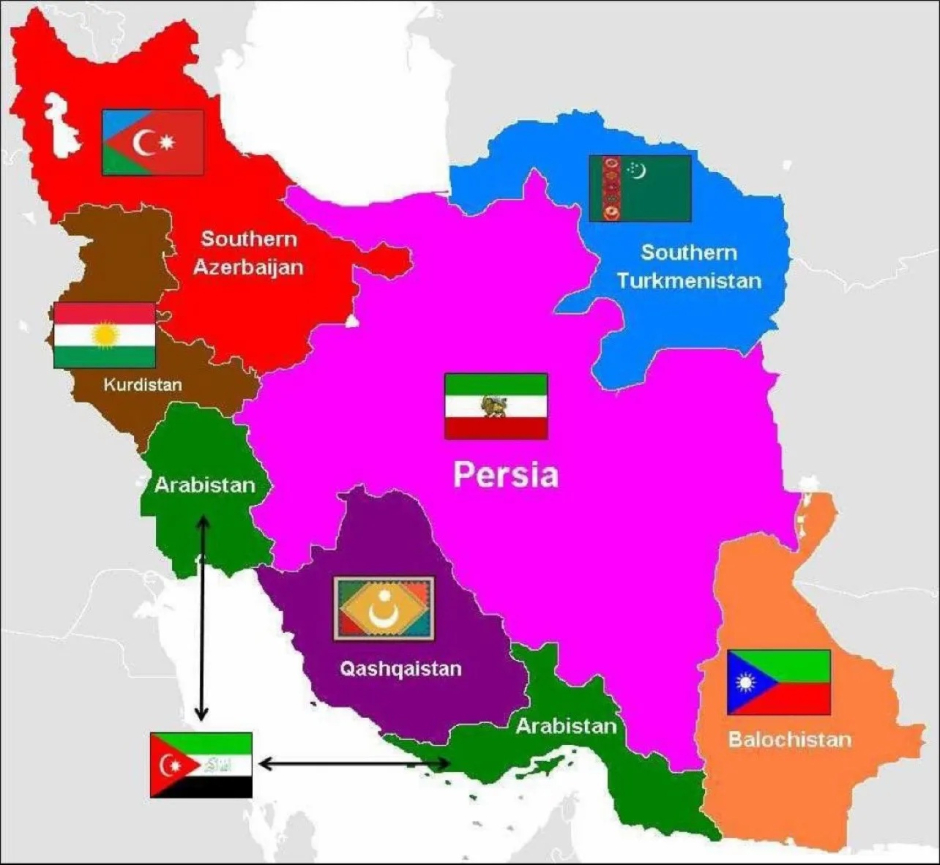
However, Iran's military success over the last half year has greatly diminished the chances of certain other changes in the region. For years, the Neocon enemies of that large and populous country of over 90 million had dreamed of its fragmentation, hoping that it could be balkanized into a series of weak statelets. At the beginning of the recent war they had even sometimes circulated maps showing such a fractured Iran. But Iran emerged victorious and dismemberment is a fate reserved for the losers.
One of the main reasons Iran was viewed with such intense hostility and marked for destruction was that it was seen as Israel's most formidable regional rival. So long as it stood undefeated and intact, Israel's plans for territorial aggrandizement were much less likely to be successful.
For generations, right-wing Israelis and the Christian Zionists who supported them had envisioned an Israel that included all the lands from the Nile to the Euphrates, these having been permanently deeded to the Jewish people by divine command in the Old Testament.
This vastly expanded Israel not only included the West Bank and Gaza but also all of Jordan and Lebanon, most of Syria, and very large portions of Iraq, Saudi Arabia, and Egypt. Thus, Israel's true borders encompassed nearly all of the Middle East, and increasing numbers of Israelis have declared their determination to implement that project, planning to kill, expel or enslave the tens of millions who currently occupy those lands. Small maps of this future Greater Israel were often worn on the clothing of right-wing Israelis.
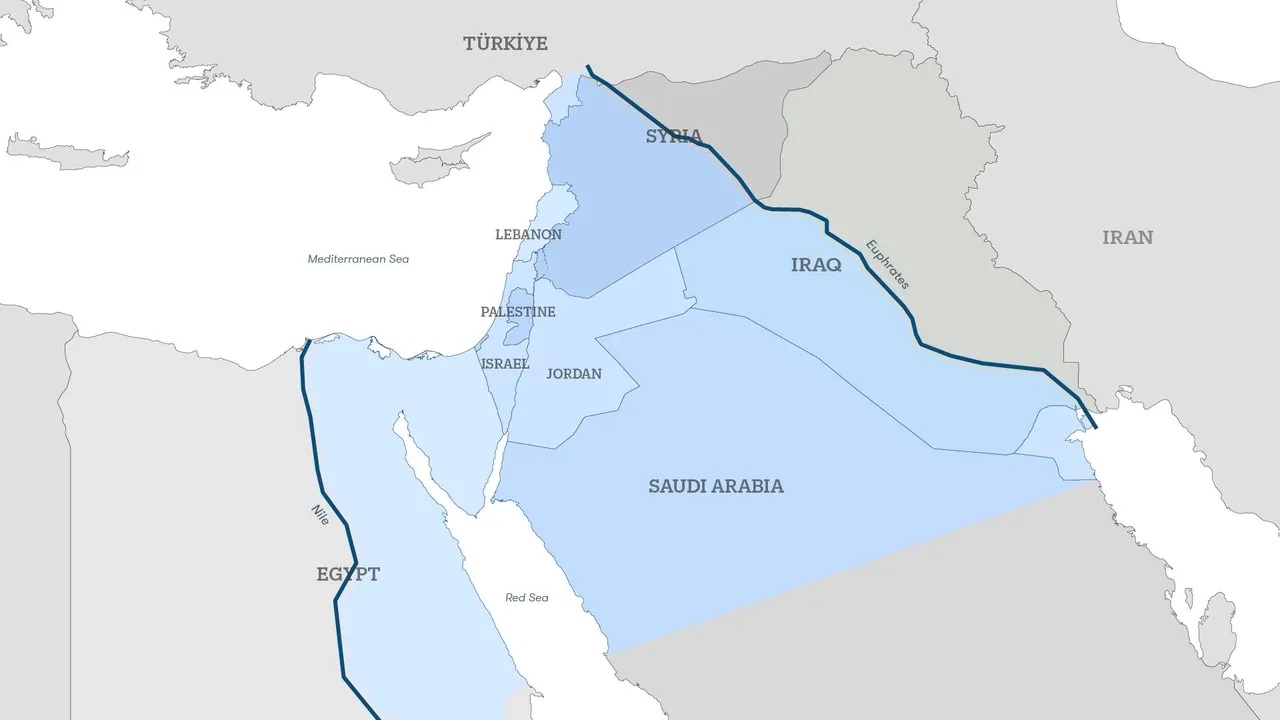
As I discussed in a February article, just a few days before the start of the Iran War, Tucker Carlson had released a long interview with Mike Huckabee , the American ambassador to Israel. In their discussion, Huckabee declared himself a firm believer in Israel's Biblical rights to most of the entire region, regardless of which other countries currently controlled those territories.
When Carlson pressed Huckabee in their conversation, the latter expressed his support for such Israeli territorial expansion, declaring "It would be fine it they took it all."
“It would be fine if they took it all.”
Over the last couple of years, the Israelis have almost totally destroyed Gaza, and since the beginning of the Iran War, they have used the opportunity to do much the same to southern Lebanon, the next phase of their expansionist agenda. The Trump Administration is now planning to provide Israel with some 40,000 one-ton bombs, a sufficient quantity of munitions to flatten much of those countries.
But with Iran victorious in the war and American forces largely expelled from the region, those hopes and dreams of a Greater Israel now seem very unlikely to be realized.
Although those Israeli sentiments have become far more widespread and blatant in recent years, they are hardly new ones. One of my earliest American Pravda articles from 2018 had included this interesting description:
In 1983, Amoz Oz, often described as Israel's greatest novelist, had published In the Land of Israel to glowing reviews. This book was a collection of lengthy interviews with various representative figures in Israeli society, both moderate and extreme, as well as some coverage of the Palestinians who also lived among them.
Of these ideological profiles, one of the shortest but most widely discussed was that of an especially hard-line political figure, unnamed but almost universally believed to be Ariel Sharon, a conclusion certainly supported by the personal details and physical description provided. Near the very beginning, that figure mentioned that people of his ideological ilk had recently been denounced as "Judeo-Nazis" by a prominent liberal Israeli academic, but rather than reject that label, he fully welcomed it. So the subject generally became known in public discussions as the "Judeo-Nazi."
That he described himself in such terms was hardly an exaggeration, since he rather gleefully advocated the slaughter of millions of Israel's enemies, and the vast expansion of Israeli territory by conquest of neighboring lands and expulsion of their populations, along with the free use of nuclear weapons if they or anyone else too strongly resisted such efforts. In his bold opinion, the Israelis and Jews in general were just too soft and meek, and needed to regain their place in the world by once again becoming a conquering people, probably hated but definitely feared. To him, the large recent massacre of Palestinian women and children at Sabra and Shatila was of no consequence whatsoever, and the most unfortunate aspect of the incident was that the killers had been Israel's Christian Phalangist allies rather than Israeli soldiers themselves.
Now rhetorical excess is quite common among politicians and a shroud of pledged anonymity will obviously loosen many tongues. But can anyone imagine an American or other Western public figure talking in such terms, let alone someone who moves in higher political circles ? These days, Donald Trump sometimes Tweets out a crude misspelled insult at 2am, and the American media is aghast in horror. But given that his administration leaks like a sieve, if he routinely boasted to his confidants about possibly slaughtering millions, we surely would have heard about it. For that matter, there seems not the slightest evidence that the original German Nazis ever spoke in such ways privately, let alone while a journalist was carefully taking notes. But the "Judeo-Nazis" of Israel are another story.
As near as I can recall, the last even slightly prominent figure in American public life who declared himself a "Nazi" was George Lincoln Rockwell during the 1960s, and he was much more of a political performance artist than an actual political leader. Even as marginalized a figure as David Duke has always hotly denied such an accusation. But apparently politics in Israel is played by different rules.
In any event, Sharon's purported utterances seem to have had little negative impact upon his subsequent political career, and after spending some time in the political wilderness after the Lebanon disaster, he eventually served five years as Prime Minister during 2001-2006, although by that later date his views were regularly denounced as too soft and compromising due to the steady rightward drift of the Israeli political spectrum.
- American Pravda: Jews and Nazis
- Ron Unz • The Unz Review • August 6, 2018 • 6,800 Words
In the decades since the 1980s, such bold statements by Israeli political leaders have steadily migrated from anonymous private conversations to public declarations.
For example, Prime Minister Benjamin Netanyahu has repeatedly boasted that Israel is currently fighting a seven-front war against its many national enemies, and other Israeli leaders even deem that insufficient.
Soon after Israel attacked Iran, former Prime Minister Naftali Bennett declared that his country might need to next wage war against Turkey.
Leading Israeli newspapers soon declared that the large NATO member actually constituted a greater national threat than the Islamic Republic.
With America and its enormous global power widely seen as being fully under Israeli control, these explicit public threats against Turkey were obviously taken very seriously by that country, and they surely explain why Turkey soon joined Saudi Arabia and Pakistan in a mutual defense agreement rather obviously aimed against Israel.
Pakistan is the sole Muslim state possessing nuclear weapons, and in an early 2020 article I'd pointed to the considerable evidence that during the late 1980s Israel had assassinated the entire Pakistani government in a futile effort to derail that development program, with the American ambassador and a U.S. general losing their lives in the same incident.
Israel successfully assassinated most of the top Iranian political and military leaders at the very beginning of the current war, but Iran still seems to have been victorious in the conflict. Its very large arsenal of highly accurate missiles have now given it clear strategic superiority over the Jewish State, though the agitated political leaders of the latter seem loathe to recognize that reality.
That sort of tendency toward extreme unrealism seems quite widespread in Israeli society.
For example, not long after the 2023 Hamas attack, a top Israeli political leader interviewed on RT had denounced Russia for being insufficiently pro-Israel in the current conflict and he therefore outrageously threatened the country possessing the world's largest nuclear arsenal.
//embed.crooksandliars.com/embed/fbVPmp7ESoon after attacking Iran and assassinating its leadership, an IDF military spokeswoman boasted that Israel had the same ability to eliminate Russia's top leaders and would kill all those who were deemed unfriendly or took an "anti-Israel position."
I think a major problem with this approach is that the Israelis seem unaware that it might cut both ways. While they have regularly launched surprise attacks against their many enemies, they seemed totally unprepared whenever such methods were used against them. Iran and Israel are still locked in a state of war, so that any such attacks would be fully justified from any legal or religious perspective.
By destroying most of America's regional strategic radars, the Iranians have blinded the Israelis to any incoming attacks, so the latter would have barely a minute or two of warning if missiles were fired in their direction. No one would be able to project the exact target until the missiles had hit.
Israeli air defenses are generally ineffective, largely depleted, and totally useless against Iranian hypersonic missiles, which are now deadly accurate and apparently have access to real-time intelligence.
The Israelis were the ones who killed Ayatollah Khamenei, his family, and most of the other top Iranian leaders, so Iran surely feels that they still have a debt of honor to repay.
MIT Prof. Ted Postol has spent decades as one of our most renowned missile experts, and in an interesting analysis last month, he claimed that the newer Iranian hypersonic missiles actually have far more striking power than the Russian Oreshniks. Among the examples he gave, a single such missile could totally destroy our Library of Congress building in DC and everything it contained.
Checking with the Gemini AI, our Library of Congress is more than 40 times larger than the Israeli Knesset building.
So suppose that the Iranians simply waited until the Knesset was fully in session and the members were heatedly debating some important topic, perhaps when they should next attack Iran. A single missile strike would destroy them all. With almost no advance warning, there would be few if any survivors.
Nearly simultaneous missile strikes could destroy the Mossad HQ and the military HQ, as well as secondary command centers. Blast shelters are only useful if you have sufficient advance warning, and with the regional radars eliminated, no such warning would be provided.
The near-total annihilation of Israel's entire political and military class would certainly have the salutary benefit of demonstrating to everyone the inadvisability of initiating such assassination policies against the leadership of unfriendly foreign governments.
Israel only has a limited number of major airbases, and with almost no advance warning, a small number of additional missiles could probably catch most of the Israeli air force on the ground and destroy it. With those initial missile strikes having severely disrupted the Israeli command system, huge waves of Iranian drones could easily destroy much of what remained.
As far as I can see, the only reason the Iranians would be reluctant to take this course of action and permanently eliminate their Israeli enemies would be the obvious likelihood of nuclear retaliation.
In the interview with Col. Wilkerson that I discussed above, he argued that the Iranians probably now had access to real-time satellite intelligence that would inform them when the nuclear warheads were being loaded onto the bombers, giving them plenty of time to destroy those targets with missile strikes. But that would involve serious risks. Also, by most accounts the Israelis had cruise missiles tipped with nuclear warheads that could be launched by the handful of diesel submarines that the Germans had given them. Wilkerson thought that the warheads were small ones and that since the subs needed to surface in order to fire them, the watchful Iranians might be able to target and destroy them as they attempted to do so, or then intercept the cruise missiles fired. But this would involve further risks. So possible Israeli nuclear retaliation remains a very serious factor.
I am hardly any sort of professional military planner but if these sorts of scenarios seem so obvious to me, they would surely also be in the minds of those individuals who fall into that category.
So I suspect that concerns over these sorts of hypersonic missile decapitation scenarios may explain why the Israelis have suddenly become so extremely reluctant to get involved in the more recent rounds of combat against Iran.